
Last updated November 22, 2026
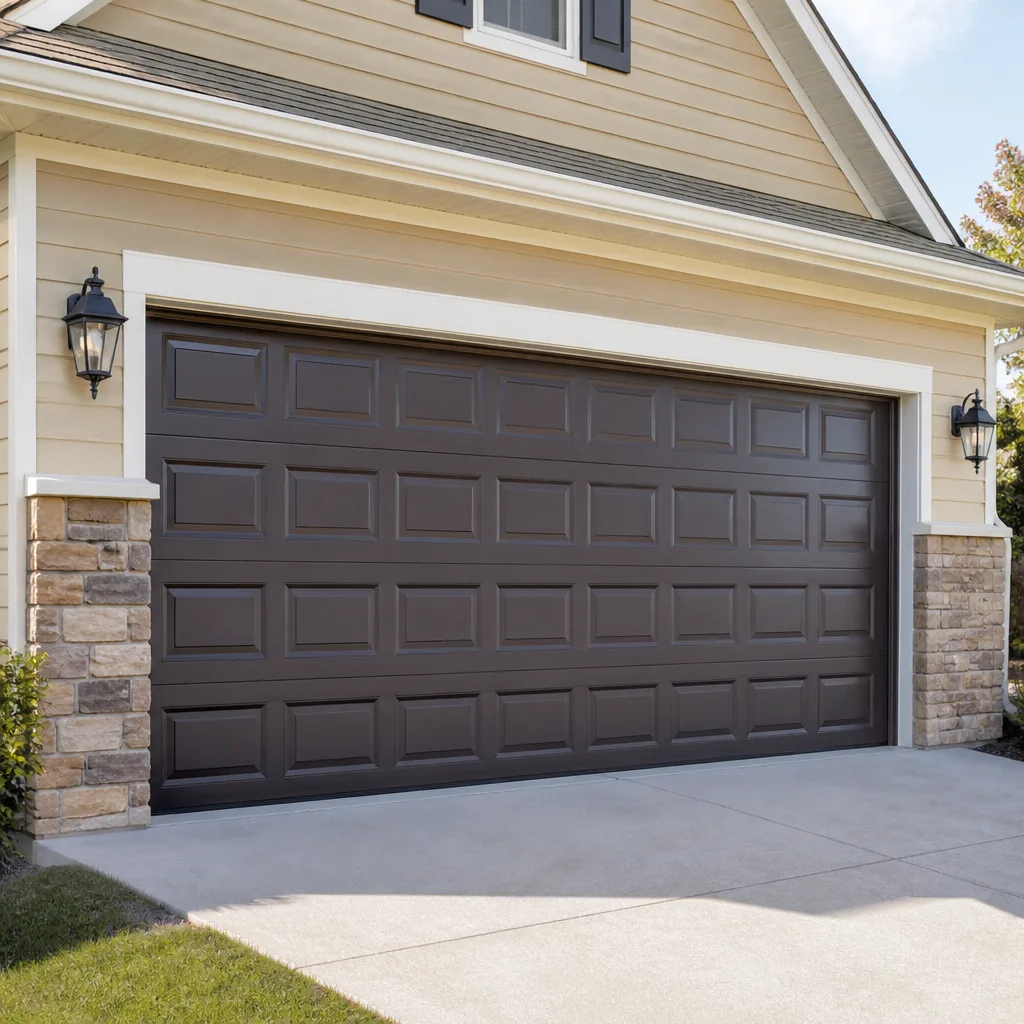 Raised-panel steel
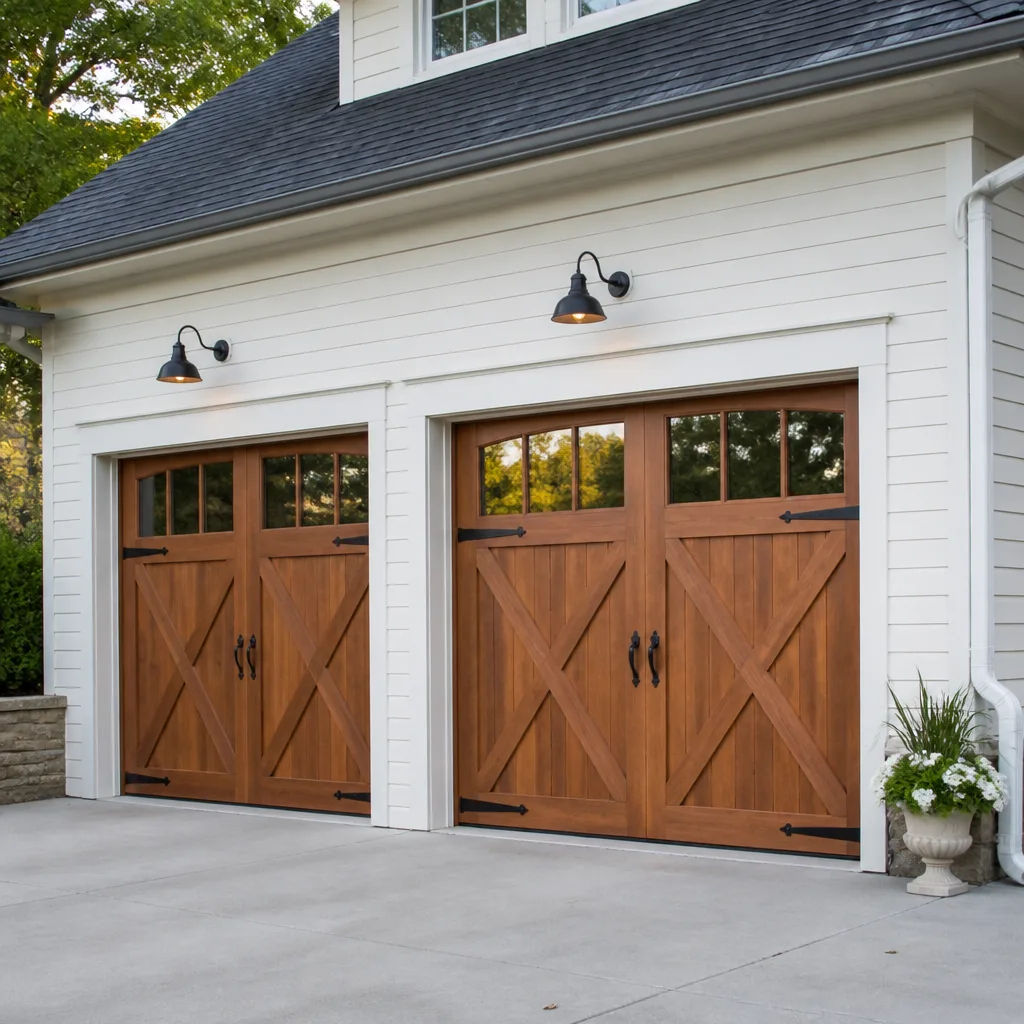 Carriage house
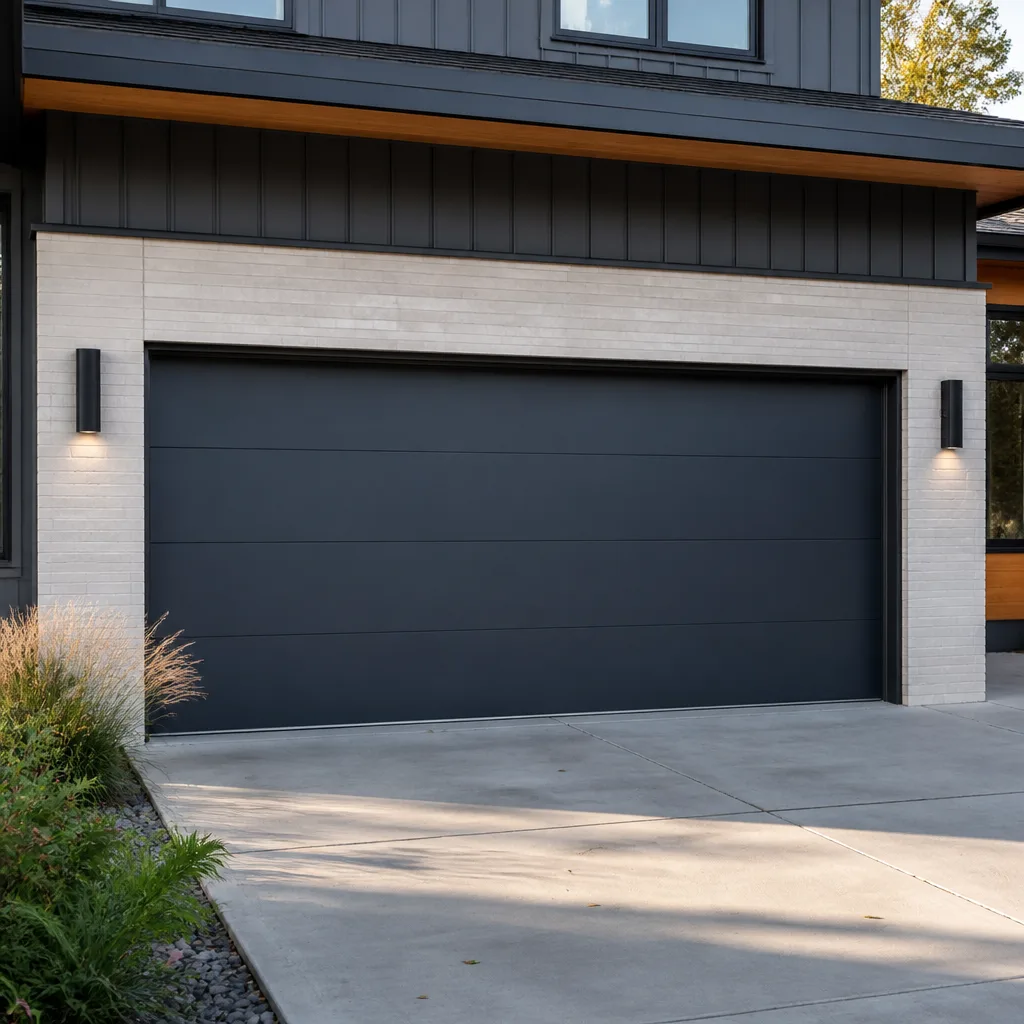 Modern flush
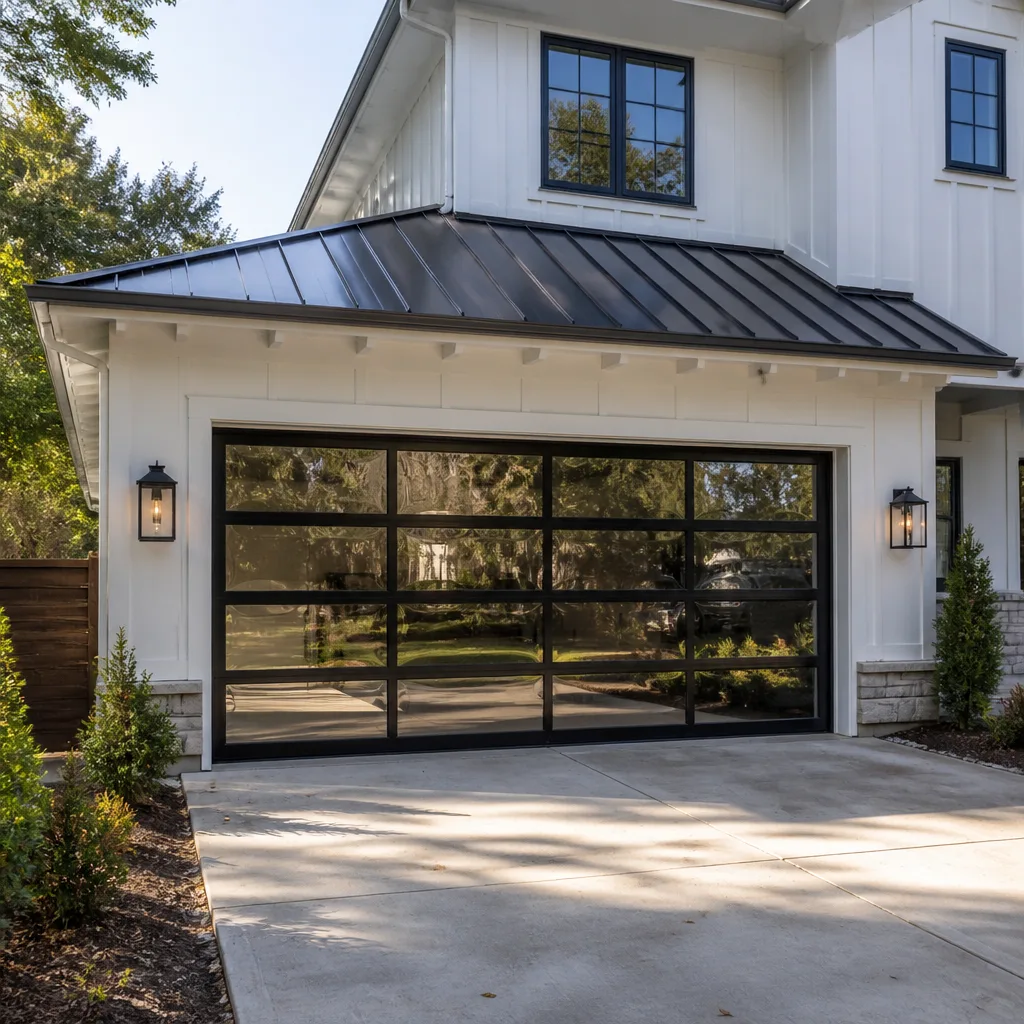 Full-view glass
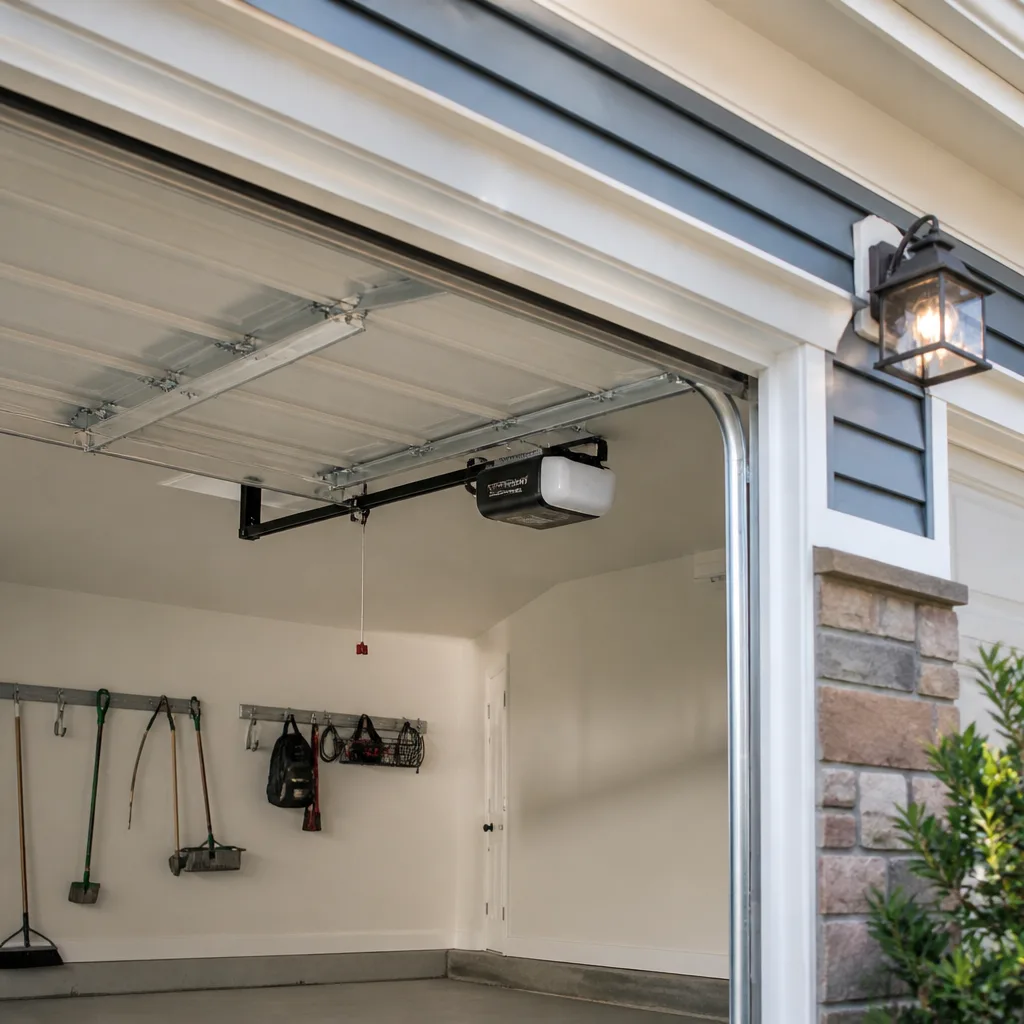 LiftMaster openers
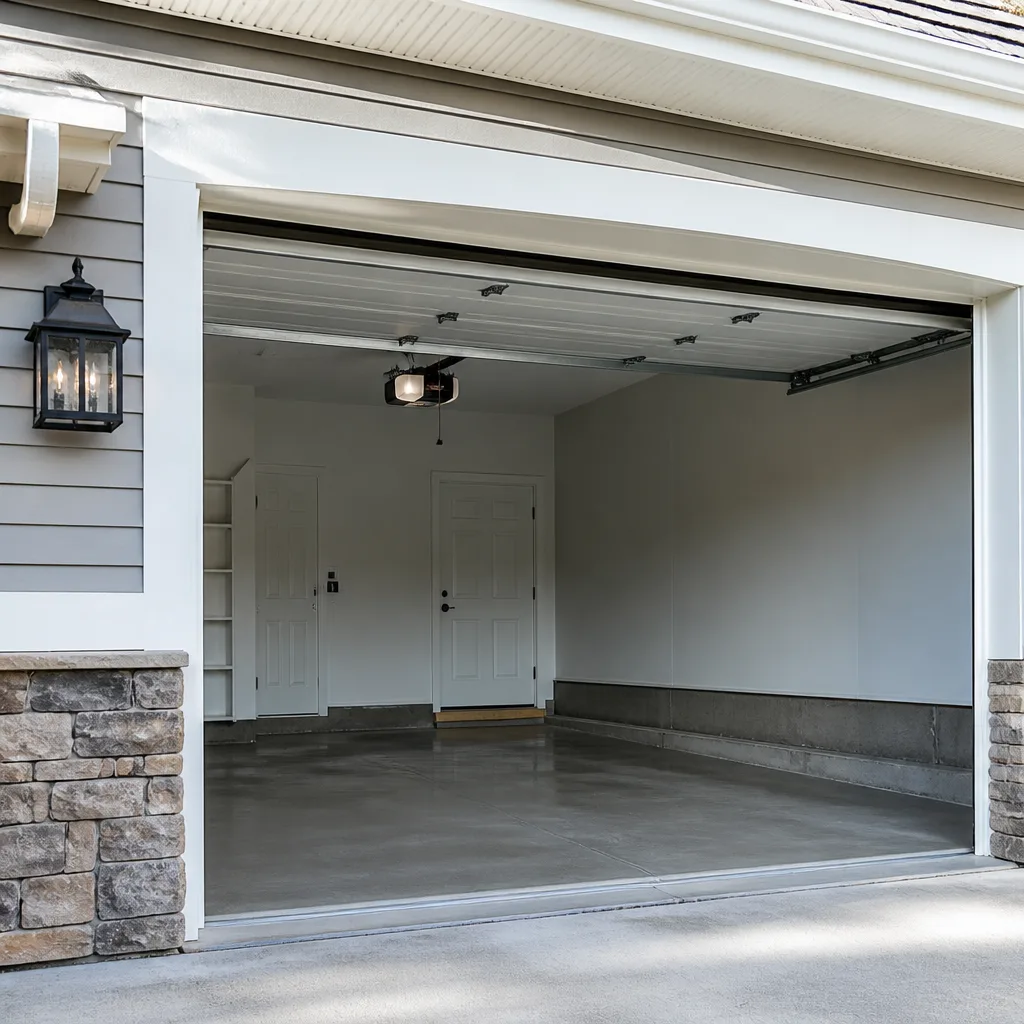 Chamberlain openers
Full 25-point door and opener safety check with every visit - springs, cables, rollers, tracks, and your LiftMaster or Chamberlain opener included
You get a price before we start. It does not change when the pro arrives.
Get your free estimateGarage Door Warning Signs: A Hampden Homeowner’s Reference Guide
Most garage doors don’t fail suddenly. They fail slowly, and they tell you about it for weeks. The tricky part is that the change happens in small increments, so your ears adjust. The door gets a little louder each month, the opener strains a little harder, and then loud becomes normal. By the time something actually breaks, the warning signs were there for a while and nobody noticed. Hampden sits on the high plains where temperatures swing hard between summer afternoons and cold nights, and that daily expansion and contraction works on springs, hinges and rollers. We’ve seen the same pattern in this town again and again. This guide resets the baseline so the warnings become obvious again.
Quick Answer
The main garage door warning signs are grinding, popping or scraping noises, a door that opens unevenly or jerks on the way up, visible rust or coil gaps on the springs, and an opener that hesitates or reverses for no reason. Any single symptom on a torsion spring, a frayed cable or a bent track means stop using the door and get it looked at. Most other signs are wear you can monitor while you plan a repair.
Styles & brands we work with
- Raised-panel steel
- Carriage house
- Modern flush
- Full-view glass
- LiftMaster openers
- Chamberlain openers
Table of Contents
- Why Your Door’s Warning Signs Get Ignored
- What Three Common Sounds Tell You: Grinding, Popping and Scraping
- The 90-Second Speed and Balance Check (No Tools)
- Reading Spring Wear Before a Spring Breaks
- Opener Behavior: Motor Strain, Sensor Misalignment or Logic Board
- Act Now vs. Monitor: The Decision Framework
- Seasonal Patterns on the Hampden Plateau
- What Routine Maintenance Actually Catches
Why Your Door’s Warning Signs Get Ignored
Human hearing normalizes change fast. If a noise gets ten percent louder each week, you don’t hear ten percent louder, you hear “the usual.” This is why people in Hampden call us after a cable snaps and say the door had been acting up for months, and why a spring failure often surprises a homeowner who walked past visible rust every morning. Your door has to compete with the car, the kids, the dog and your coffee, so it gets very little attention.
The fix is to stop judging your door against your memory of how it usually sounds and start judging it against how a healthy door behaves. That means simple, repeatable checks every few weeks. Three things to watch:
- Sound: A healthy door makes a low, even hum. Anything squeaky, gritty or irregular is new information.
- Speed: The door should open and close at the same pace each time, without surges or slowdowns.
- Sight: Springs, cables, rollers and tracks should look the same as last month. Fresh rust, gaps or fraying are signals.
Do one pass around the inside of the garage while the door runs, watch it going down once, and look at the springs. It takes a minute. Once you know what healthy looks like for your door, the warning signs stop hiding. Our technicians have up to 13 years of experience, and the one thing we hear most is “I thought it just sounded like that.”
What Three Common Sounds Tell You: Grinding, Popping and Scraping
Sound is the most reliable early warning a garage door gives, but only if you can tell the three main noises apart. Each one points to a different system. Grinding usually means moving metal parts are dry or worn. Popping points to bind in the track or the panel joints. Scraping means something is touching or rubbing that shouldn’t be. Here’s how to separate them.
Grinding
Grinding is a harsh, continuous sound that rises with the door’s speed. It usually comes from worn rollers, dry hinges or a motor under strain. On older doors you’ll often see rusty rollers with flat spots that have stopped rolling and started dragging. That’s a mechanical wear issue, not an emergency, but leaving it speeds up damage to the hinges and the opener.
Popping
Popping is a sharp, snapping or clunking sound that happens at the same point in the door’s travel every time. Look for bent track, loose hinges or panels that have shifted against each other. A door that has been backed into or nudged with a car often pops for years because the track was never straightened. Popping that starts suddenly after an impact should be checked before the door runs again.
Scraping
Scraping is a soft, continuous drag, like something being pulled along the floor or against the wall. It often means the door has dropped slightly on one side, a panel has warped, or a track has pulled loose from the framing. Scraping is the one sound to treat with caution because it usually means the door is no longer running square in the track.
If the noise is coming from the opener itself and not the door, that’s a separate diagnosis. garage door opener repair covers both the belt or chain and the motor unit, and it’s worth ruling out before you replace the door hardware.
The 90-Second Speed and Balance Check (No Tools)
A door that opens unevenly is telling you that its springs are no longer doing half the lifting. You can check this in about a minute and a half without any tools. Do it slowly and keep your hands clear of the panels and the spring, and stop the check any time the door feels heavier than you expect. Here’s the sequence:
- Listen to the open and close. Start the door from the wall button or remote and listen for the sound rising and falling evenly. A door that surges midway or slows near the top is under strain.
- Watch both sides go up. Stand back from the door and look at the bottom edge. It should stay level. If one corner reaches the top noticeably earlier, the left and right are out of balance.
- Check the close. The door should come down smoothly and stop cleanly against the floor without slamming or bouncing.
- Look at the gap. When the door is fully closed, the bottom seal should touch the floor along its whole length. A gap at one corner means the door is sitting crooked.
That’s the whole check. A door that stays level, opens and closes at the same speed, and seals to the floor is behaving. A door that lifts unevenly or lurches is fighting its springs, and the springs will lose. In that case, stop using the remote and treat it as a call-now item, not a monitor item.
Reading Spring Wear Before a Spring Breaks
Spring wear shows up long before the spring snaps. You can see it with your eyes from a safe distance without touching anything. The two spring types wear differently, and each has its own visual signature.
Torsion springs
Torsion springs sit on a shaft above the door and twist to counterbalance it. Wear shows in a few ways:
- Rust patterns: Surface rust along the coil, especially in streaks that look like moisture has been sitting on the spring. Rust weakens the wire and reduces its lift.
- Coil gaps: If the coils have started to separate or the spring looks stretched compared to its neighbors, the tension is no longer even.
- Winding marks: Fresh paint chipping at the winding cone can indicate the spring has shifted or been adjusted recently.
Extension springs
Extension springs run along the sides of the door above the horizontal tracks. They look like long coils that stretch and contract. Their wear patterns are different:
- Stretched coils: Note any spring that looks longer than the other side, or coils that have separated with gaps.
- Rust at the ends: Corrosion often starts at the hooks and eye bolts, where the spring takes the most load.
- Missing safety cables: Many older extension springs shipped without a cable running through the middle. If your spring snaps and there’s no cable, it will fly across the garage with serious force.
Spring work is the one part of a garage door where we tell people firmly: do not touch it yourself. The tension stored in a torsion spring is enough to break bones or worse, and a snapped extension spring will throw whatever’s in its path. Our technicians have up to 13 years of experience working around springs. We treat a set of springs, not just one broken coil, and we’d rather you call this one than open a repair manual.
Opener Behavior: Motor Strain, Sensor Misalignment or Logic Board
When the opener starts acting up, homeowners often assume it’s dying and plan a replacement. In our experience, most opener complaints come from one of three places, and two of the three are cheap to fix. Here’s how to tell them apart on the brands most Hampden garages run, including Chamberlain and Genie units.
Motor strain
The door runs stiffly or the opener hums but struggles. This often has nothing to do with the opener itself: a heavy, unbalanced door overloads the motor. Fix the door and the opener usually recovers. If the opener strains while the door moves freely by hand (and you can safely lift it), the motor or gear assembly is likely worn.
Sensor misalignment
The safety sensors near the floor stop the door from closing if the beam is broken. If one sensor has been knocked or the sun hits it directly, the door will stop and reverse. Look at the sensor lights: solid means aligned, blinking means the beam isn’t reaching. Wipe the lenses and check the bracket angle before calling.
Logic board issues
Logic board trouble shows up as the opener responding oddly: opening when you press close, losing remote memory, or running for a fraction of the travel and stopping. If the door moves easily and the sensors look fine, the board or its wiring is the leading suspect. Some boards are repairable, some aren’t, and we’ll tell you which yours looks like.
If your opener is the older Craftsman unit that came with the house, a straightforward repair is often cheaper than a new opener. Replacing it is a decision worth making on its own timeline, not in a panic on a weekday morning.
Act Now vs. Monitor: The Decision Framework
Most of what you’ll find on your garage door is normal wear you can track. Some of it is a hazard you should stop using the door for. The trick is knowing which is which, especially when Hampden’s temperature swings push everything a little harder than it would be elsewhere. Here’s how we sort it.
Act now (stop using the door)
- Visible bend, gap or rust-through on a torsion spring, or one that has snapped.
- Frayed, kinked or dangling cables.
- A track that has visibly pulled away from the wall or is bent so the door rubs it.
- The door dropping more than a few inches when the opener is engaged.
- An opener that reverses on its own without a sensor cause.
Monitor (stop and look each time)
- A new squeak or grind that changes slowly.
- Rust spots starting on hinges or rollers.
- One remote that has become less responsive, while the wall button still works.
- Minor scraping at one end of the door that comes and goes.
Normal (keep going)
- Light squeaking after a temperature drop that quiets once the door runs.
- A small amount of rust bloom on old hinges.
- The door closing with a slightly louder thud in cold weather.
The rule of thumb: anything that changes how the door carries its own weight goes in “act now.” Anything that changes how the door sounds or looks gets monitored and written down. If a monitored item gets worse over two or three weeks, it moves up the list.
Seasonal Patterns on the Hampden Plateau
A Hampden garage is a hard place for a garage door. Days can swing from warm to cold quickly, and the spring has to handle that range in a single afternoon. What that means for the door you own is a set of seasonal patterns we see year after year.
- Late fall and early winter: The first hard cold snap is when most spring failures happen. Steel contracts, and a spring already weakened by rust is more likely to give.
- Winter: Grease stiffens, so the door runs harder for the first few cycles. Grinding is more noticeable on cold mornings because the rollers haven’t warmed up.
- Spring thaw: Meltwater collects at the base of the door and rust finds the hinges, bottom brackets and spring ends. Fresh rust on the spring is the sign to check now.
- Summer: Heat expands the track and can tighten tolerances, so doors that were quiet in winter start popping or scraping.
The other factor is how much any one door gets used. A door that cycles a dozen times a day, in and out on every school run and shopping trip, wears faster than one that opens once. In Hampden, where hail season brings people in and out for weather checks, that cycle count adds up quickly. If your door is used heavily, treat the seasonal checks as more frequent, not less.
What Routine Maintenance Actually Catches
A quick maintenance routine catches the warning signs early, before they turn into a repair. It isn’t a substitute for a spring inspection by a trained technician, but it does mean you’ll notice wear on the parts you can safely reach.
- Look at the springs once a month. Note rust, gaps and any change in shape. Don’t touch the winding cones.
- Run the 90-second balance check every few weeks. If the door starts lifting unevenly, stop and call.
- Wipe the rollers and hinges with a light oil. A very thin film is enough. Don’t spray the spring.
- Wipe the sensors and check the brackets. A sensor knocked out of line is the most common cause of a door that won’t close.
- Look at the cables for fraying. Run your eyes, not your hands, along the cables when the door is fully closed.
If you fix the small stuff as it appears, a door lasts longer and you avoid most of the mid-morning breakfast-in-the-car moments. When you do need us, garage door repair covers hardware, springs and openers on the brands you already own, including LiftMaster, Chamberlain, Genie, Clopay, Amarr, Wayne Dalton, Craftsman and Raynor. That single-service approach is why we can fit a repair into a normal day rather than a week of waiting for a part to come in.
Common Mistakes to Avoid
- Trying to adjust a torsion spring yourself. The stored tension can cause serious injury. Call a trained technician instead.
- Ignoring one small sign because the door still opens. A door still opening is not the same as a door still working safely. Grinding and popping often lead to a bigger repair if ignored for a month.
- Oiling the spring like it’s a hinge. Oil on a spring attracts grit and can hide rust that tells you when it’s about to fail. Keep lubrication for the rollers and hinges.
- Assuming a bad opener is the whole problem. If the door is heavy and unbalanced, replacing the opener just wears out a new one faster. The door needs fixing first.
- Using a door with a bent track while you wait for a better day. A rubbing track will damage the rollers and can bend the panel. Stop using the door and get the track straightened.
- Buying a new door when a repair will do. Old doors with good bones can be repaired. We’ll tell you honestly whether to repair or replace and give you the reason in plain words.
- Skipping the balance check because it takes a minute. This is the single most useful thing you can do as a homeowner. It takes less time than a coffee.
See the difference
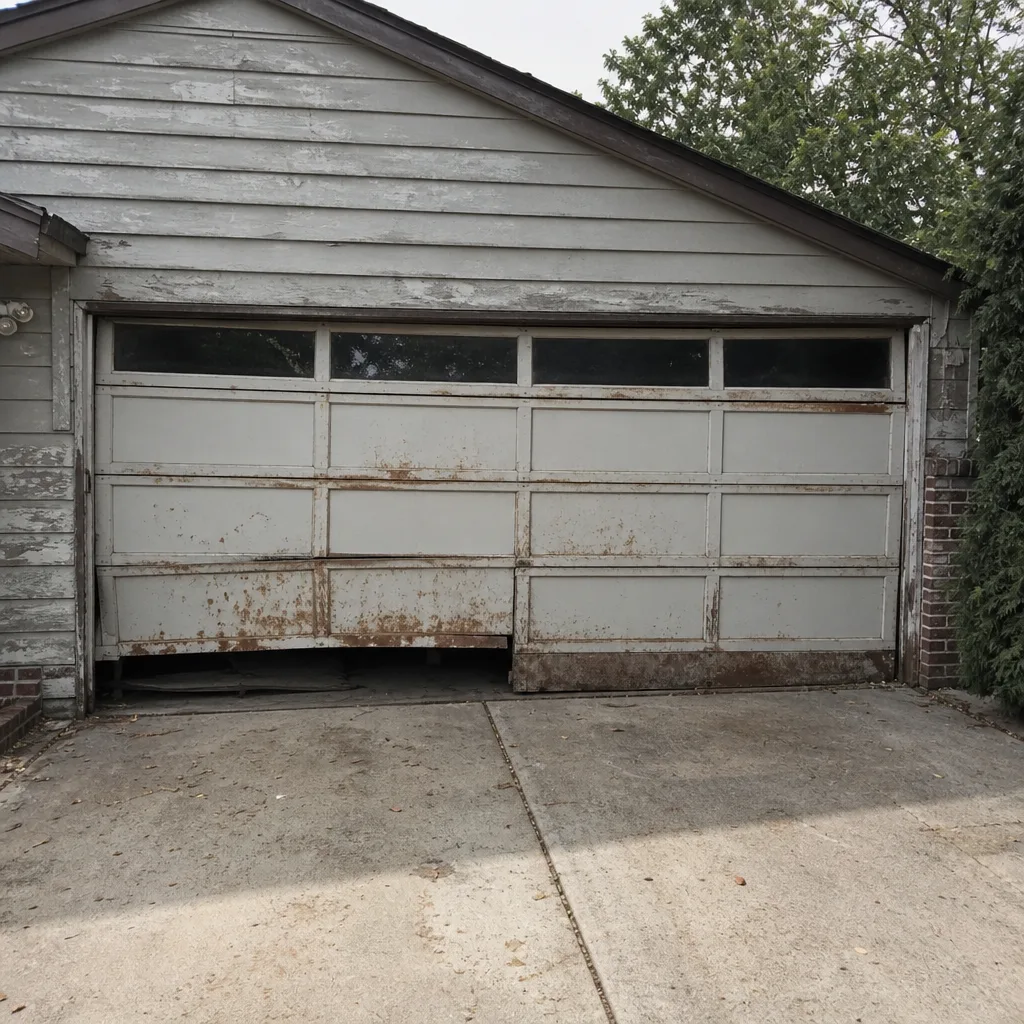 Before
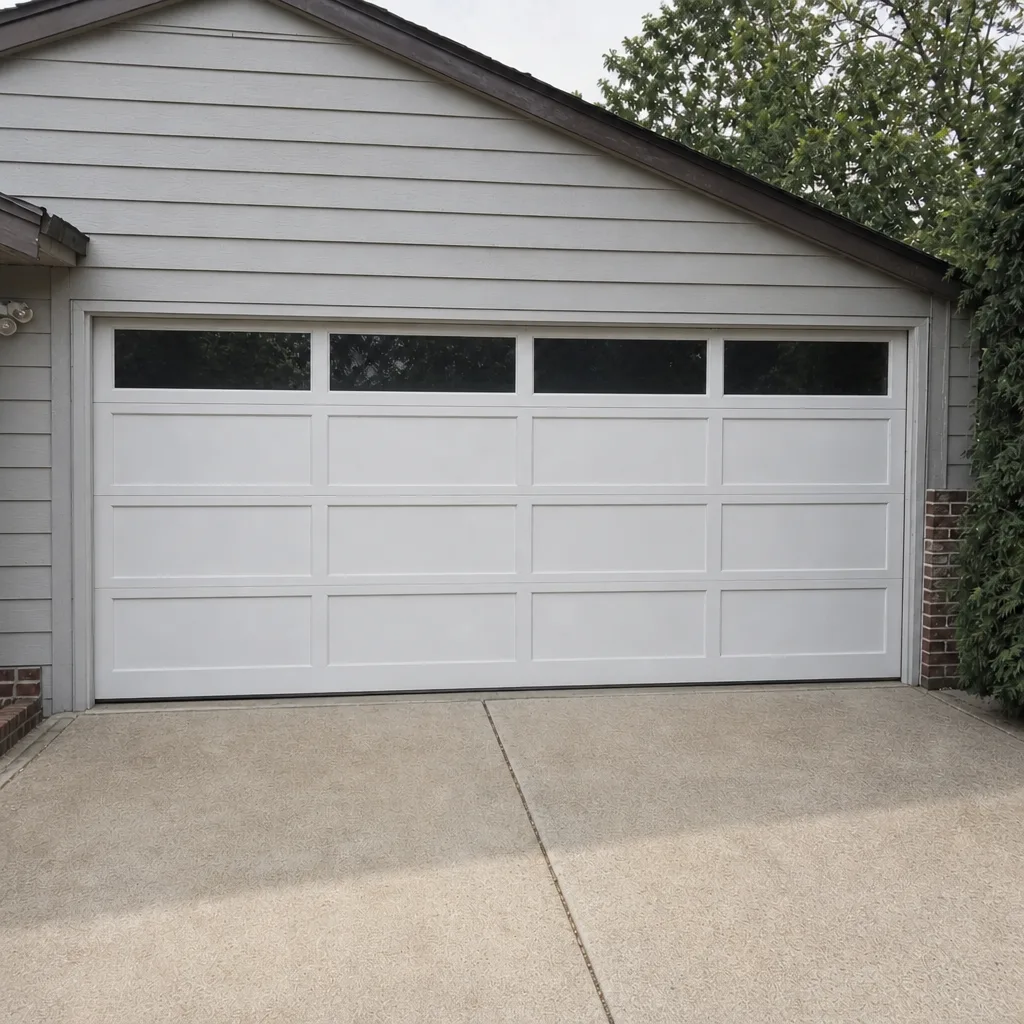 After
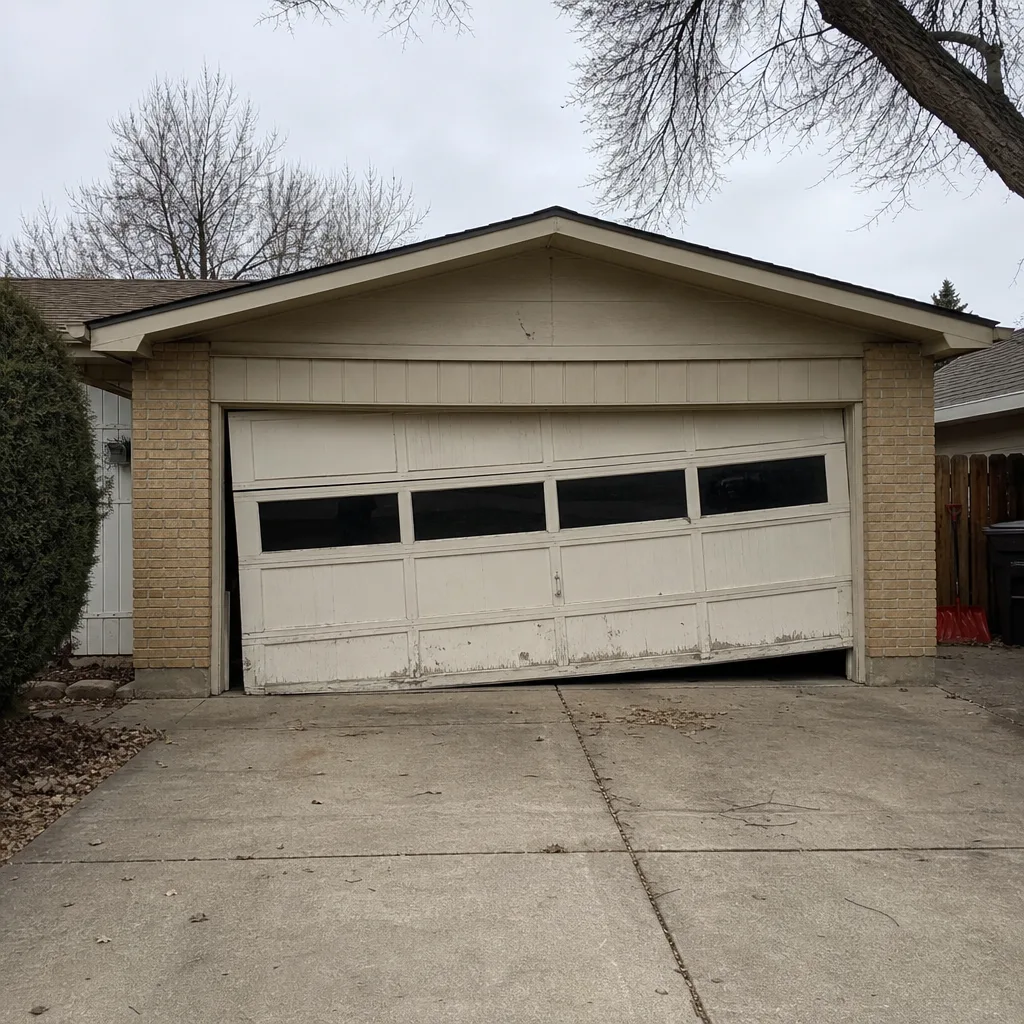 Before
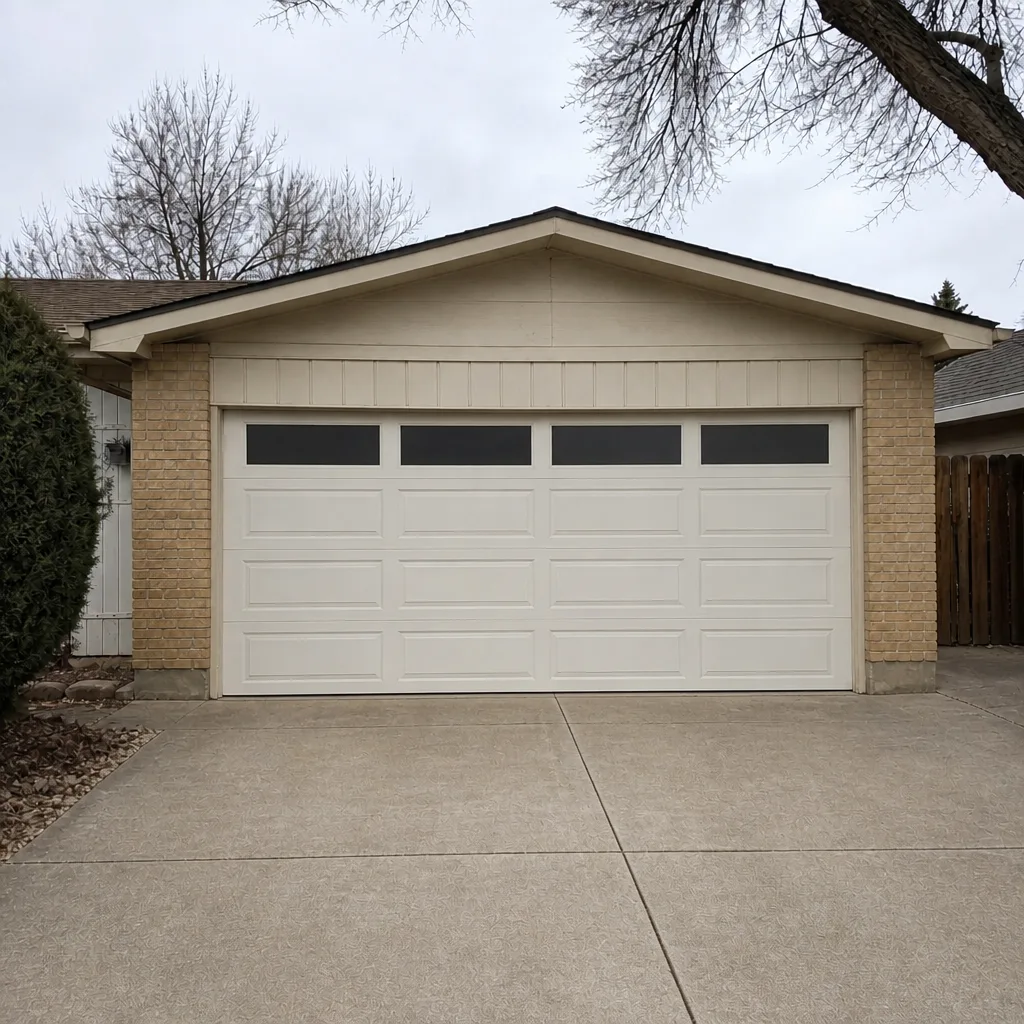 After
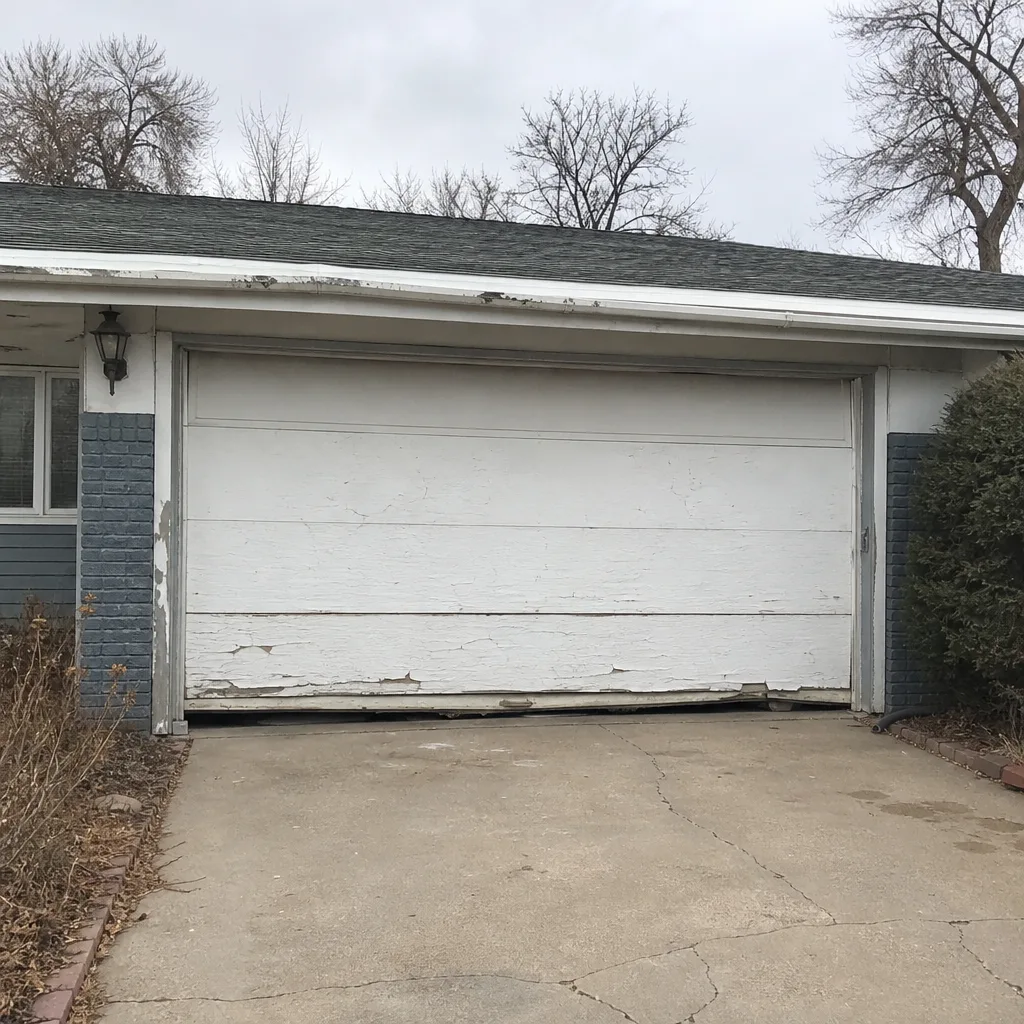 Before
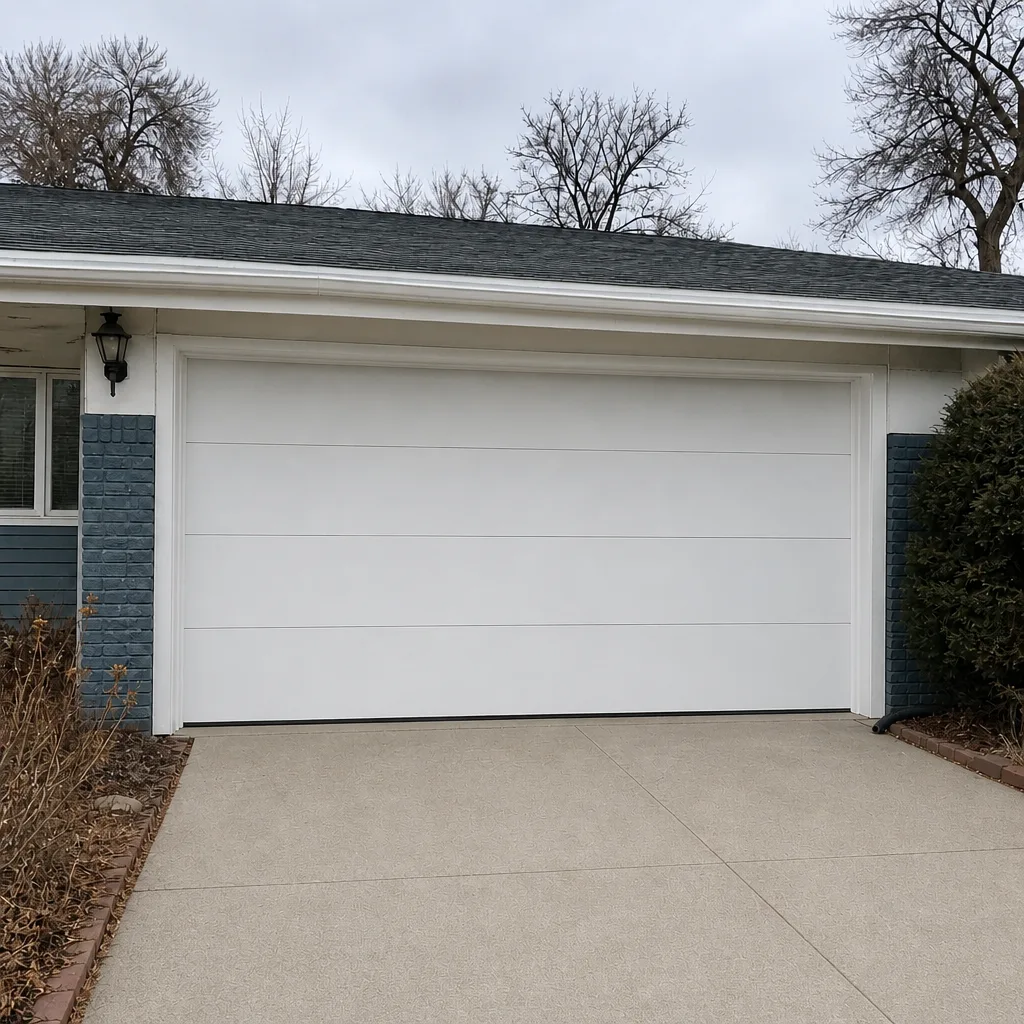 After
When to Call a Professional
Call a professional when the door doesn’t open evenly, a spring looks bent or broken, a cable is frayed, or the door reverses with no sensor cause. These are the situations where continuing to use the door turns a repair into a replacement, or worse. Safety is the reason we keep saying “leave the springs alone,” and it’s the reason we keep recommending a trained eye for anything that carries the door’s weight. There’s no shame in stopping the door and calling.
Hampden Garage Door Repair offers free estimates in Hampden. Our technicians have up to 13 years of experience, we work on the brand you already have, and we stock parts so most repairs are done on a single visit. If your door needs replacing, garage door installation runs from the first measurement through the finished door. One call covers the whole door, whether it’s opening day or replacement day. Call (855) 490-5104. We answer 24/7. Fast dispatch from 7am to 7pm, Sunday through Friday.
Frequently Asked Questions
The most common early sign is a grinding or scraping sound that grows over several weeks, along with a door that no longer opens evenly. If you notice either, stop using the door and look at the springs before doing anything else. If the springs look normal, book a balance check and get the door looked at. Call (855) 490-5104 for a free estimate.
Spring wear in Hampden shows up as rust along the coil and either gaps between the coils on a torsion spring or a stretched look on an extension spring. Once those signs appear, the spring has less lift left and cold snaps will push it harder. If you see them, stop using the door and call. Our technical team has up to 13 years of experience working with springs and can tell you the condition in a few minutes.
A noisy door almost never fixes itself. The grinding or squeaking might fade for a week or two after a temperature swing, which fools people into thinking it’s cooled off. Underneath, the worn rollers or dry hinges keep wearing. A quick check of the rollers and hinges and a light oil on the moving parts will quiet a normal squeak. If the noise is popping or grinding, get it seen.
We give an exact price after we see the door, written down and agreed before any work starts, so the invoice matches the estimate. Springs are a matched pair and are usually replaced together, and the written estimate reflects your actual door and the state of the hardware. Call (855) 490-5104 for a free estimate. We’ll tell you plainly whether to repair or replace.
Don’t force it. If the opener hums but the door doesn’t move, a spring or a cable may have failed and the door is carrying full weight on the opener. Pull the manual release (the rope with the handle) only when the door is closed and you’re standing clear, then try lifting the door by hand. If it’s heavy, the problem is with the door and you should call. If it lifts easily, the opener needs a look. Call (855) 490-5104. We answer 24/7, with fast dispatch from 7am to 7pm, Sunday through Friday.
Only for a monitored sign, not a hazard. A slow squeak or a little rust on the hinges can wait a few weeks with a plan. A bent track, a bad spring, a frayed cable or a door that reverses is a stop-using decision. Tell us the symptom and we’ll give you a straight answer about what’s safe. For the small stuff, a repair now usually costs less than a bigger repair later.
The Bottom Line
Garage door failures rarely come out of nowhere. They announce themselves through sound, speed and sight for weeks, and Hampden’s temperature swings speed up the wear. The fix is to reset your baseline: know what a healthy door sounds like, run the 90-second balance check, and look at the springs once a month so you can spot the change. Most signs are monitor items. Any spring, cable or balance problem is an act-now item. Next time something sounds off, take a look, then pick up the phone if it’s on the act-now list. Hampden Garage Door Repair is one call for the parts, the opener, the springs and the door. Call (855) 490-5104 for a free estimate, and for a service visit through our Hampden Garage Door Repair team. We answer 24/7. Fast dispatch from 7am to 7pm, Sunday through Friday.
Written by the team at Hampden Garage Door Repair.