
Last updated November 22, 2026
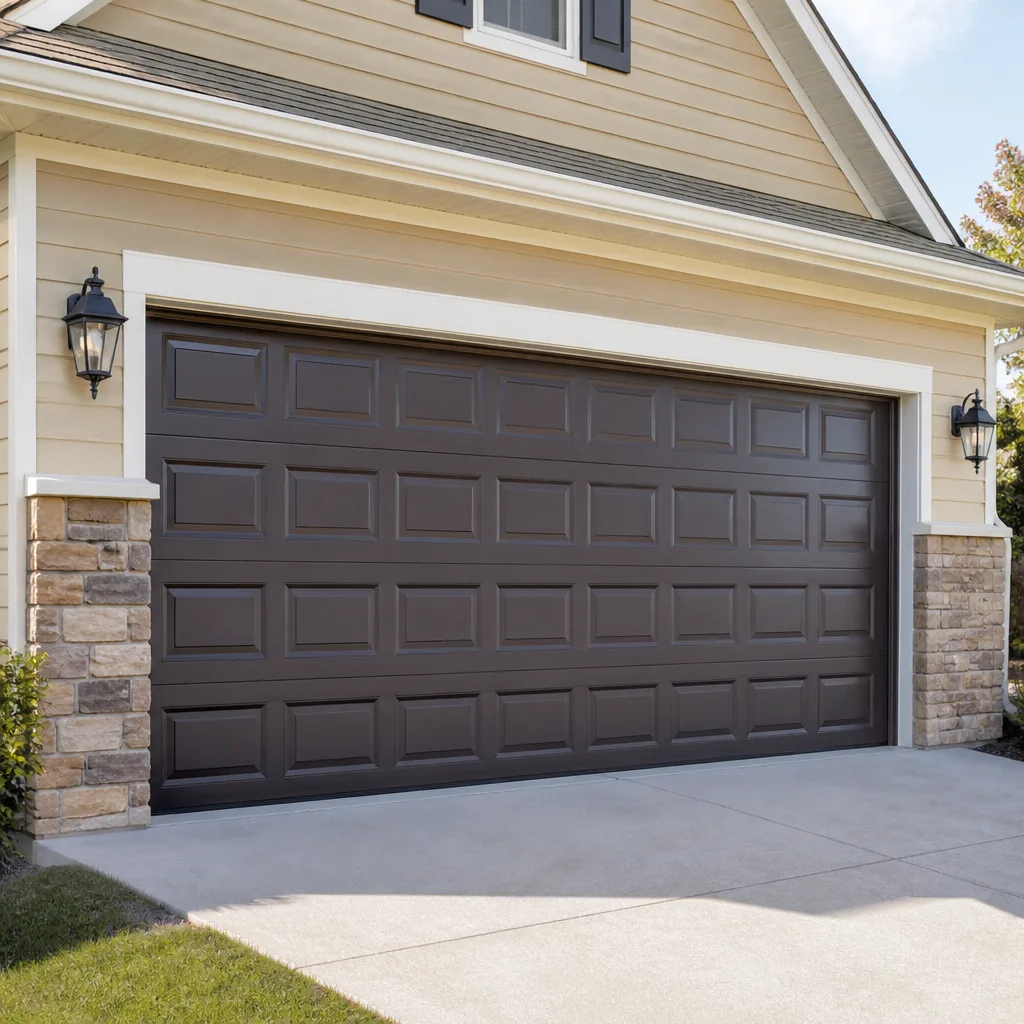 Raised-panel steel
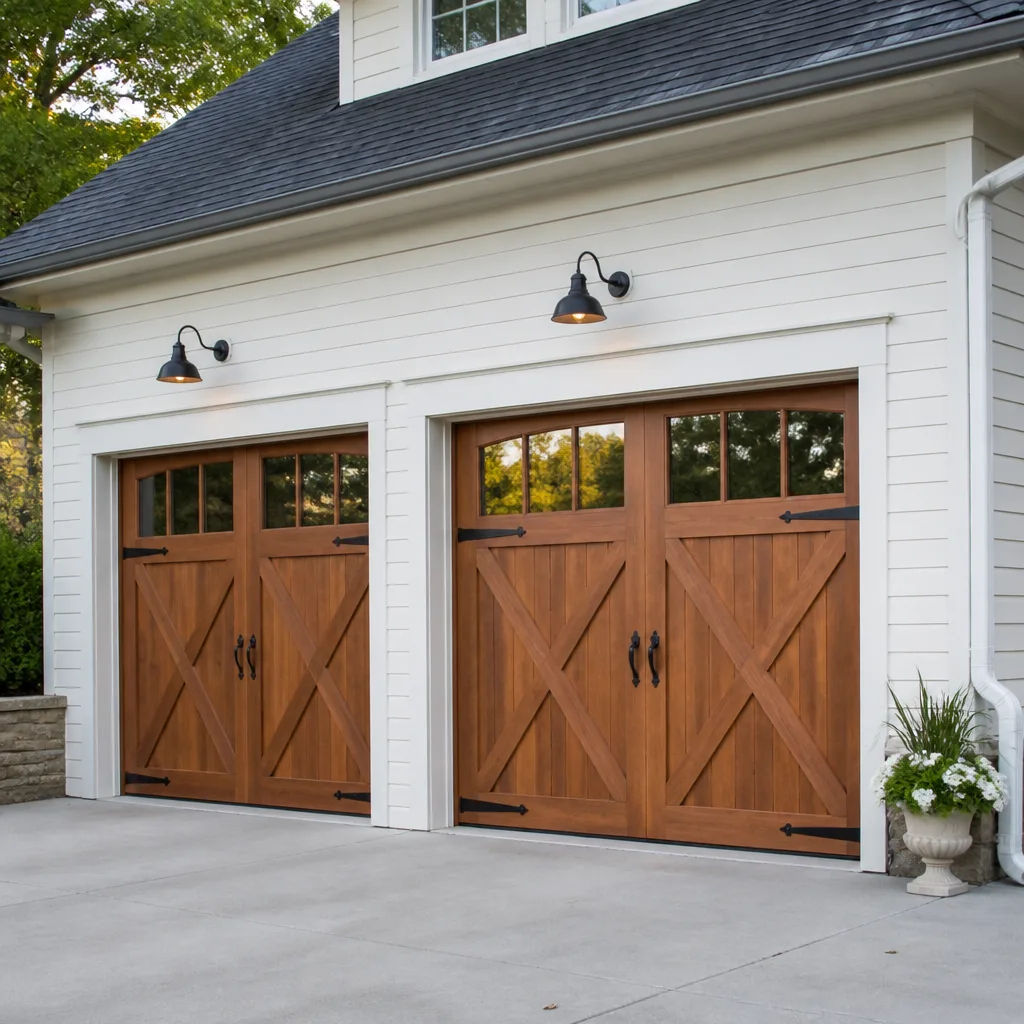 Carriage house
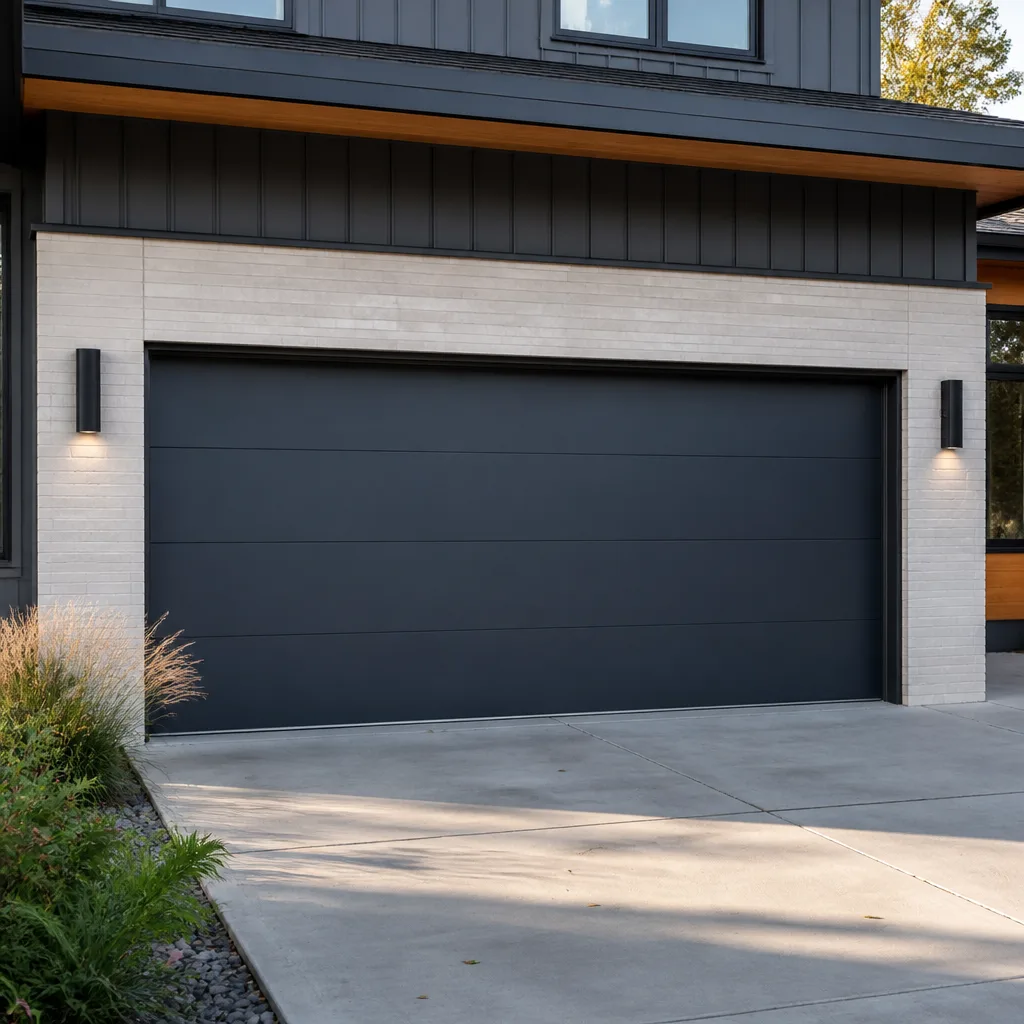 Modern flush
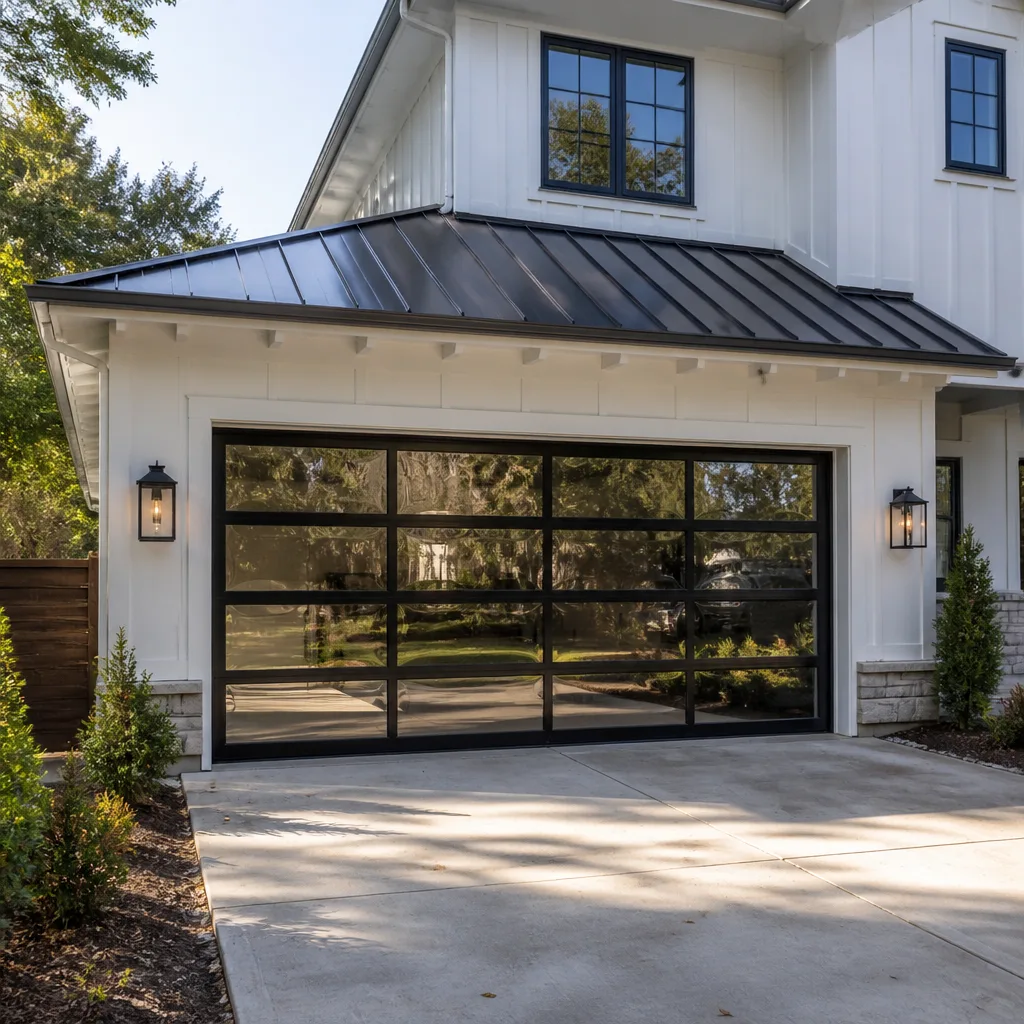 Full-view glass
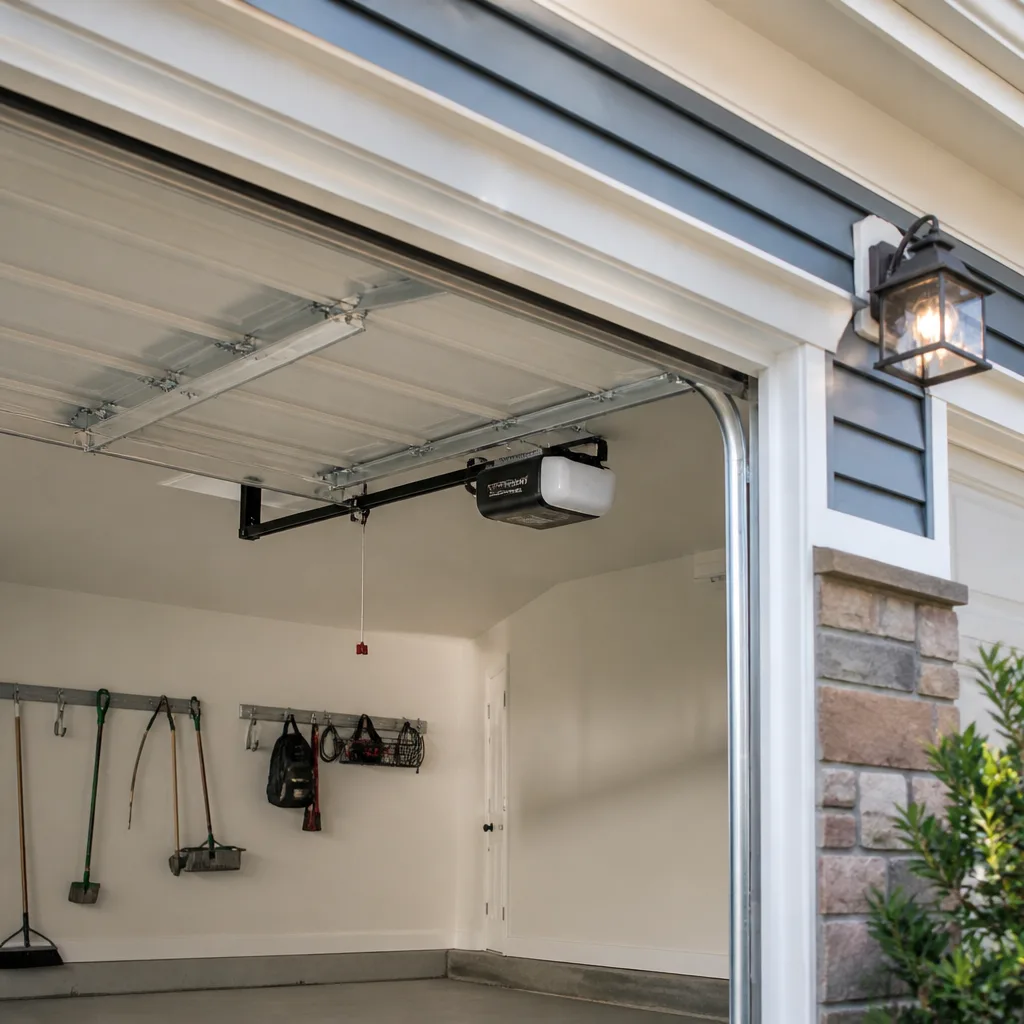 LiftMaster openers
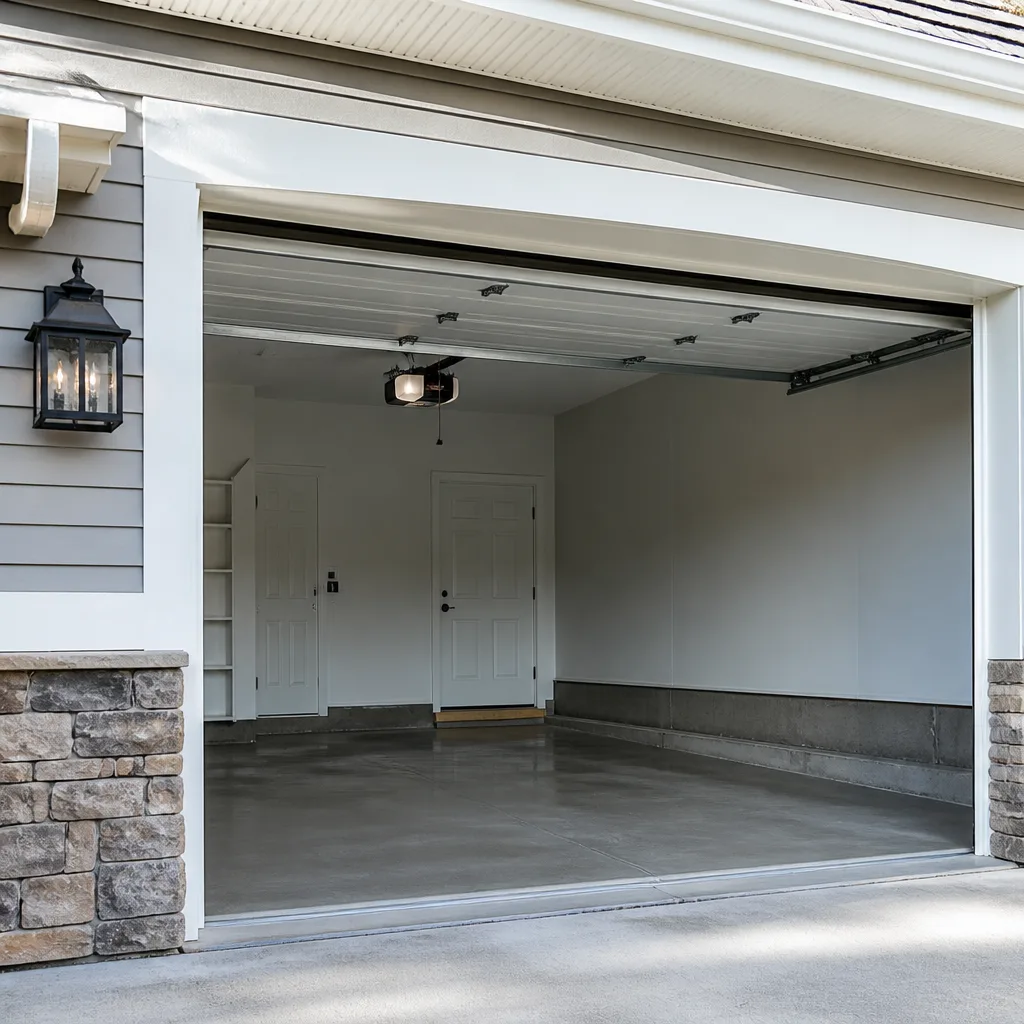 Chamberlain openers
Full 25-point door and opener safety check with every visit - springs, cables, rollers, tracks, and your LiftMaster or Chamberlain opener included
You get a price before we start. It does not change when the pro arrives.
Get your free estimateChoosing the Right Garage Door Brand: A Buyer’s Guide for Hampden
Most garage door brand comparisons are written backwards. They start with the manufacturer’s reputation and work down to the homeowner, which is why a door with an impressive national name can leave you waiting two weeks for a torsion spring that should have been on a shelf. In Hampden, where the sun does real damage to finish over time and the temperature swings from summer heat to hard winter cold, local serviceability matters more than a badge on the brochure. This guide covers how to judge brands on parts availability, service network depth, materials, opener compatibility, and warranty fine print. We’ll also map the honest gaps between premium and mid-range, so you can spend where it counts.
Quick Answer
The best garage door brand for most Hampden homeowners is the one a local technician can actually service with parts that are available nearby. A mid-tier brand with strong local parts support beats a premium brand that requires special-order components shipped from out of state. That means you evaluate a brand on three things: can your door be repaired this week, does the material hold up to Colorado’s UV and temperature range, and does the warranty hold up when you actually file a claim. Brand name is the last filter, not the first.
Styles & brands we work with
- Raised-panel steel
- Carriage house
- Modern flush
- Full-view glass
- LiftMaster openers
- Chamberlain openers
Table of Contents
- Why Local Serviceability Comes Before Brand Reputation
- How to Judge a Brand on Parts Availability
- Material Performance in Hampden’s Climate
- The Opener Ecosystem: Matching Brands Cleanly
- Warranty Fine Print That Actually Matters
- Brand Tiers Mapped to Real Hampden Use Cases
- A Step-by-Step Brand Evaluation Checklist
- Common Mistakes to Avoid
Why Local Serviceability Comes Before Brand Reputation
A premium brand that requires a two-week special order because nothing for it is stocked locally is a worse choice for a Hampden homeowner than a mid-tier brand a technician can repair this week. That sounds obvious, but almost no brand comparison includes it. Manufacturer guides rank doors by national reputation, dealer networks, and warranty length on paper. They leave out the only question that matters when your door stops working: what happens next.
Garage doors are mechanical systems with wear parts. Springs, cables, rollers, hinges, and openers all wear out or fail, and when one does, you don’t need a brand with a long history of innovation. You need a brand whose replacement parts land in your driveway fast. That’s a function of how widely a brand is installed locally, how common its component sizes are, and whether the technician standing in front of the door already knows the system.
Here in Hampden, houses range from older neighborhoods with original or once-replaced doors to newer builds where the doors are still on first springs. Those two situations call for very different brand logic. Older homes have often been retrofitted with whatever was available, so the “brand” question is really about diagnosing a mixed system. Newer homes usually have a single-brand door and opener combination that was installed together, which makes servicing cleaner if the technician works both halves. Either way, the decision point is serviceability, not prestige.
This is where an authorized-familiarity list matters. When a garage door company already knows the equipment across LiftMaster, Chamberlain, Genie, Clopay, Amarr, Wayne Dalton, Craftsman, and Raynor, you’re not paying someone to learn your system on the clock. Diagnosis becomes repair. And because we stock and supply garage door parts directly, the wait that a third-party order would add shrinks or disappears. That’s not a marketing point, it’s the whole reason the brand question should be answered locally.
How to Judge a Brand on Parts Availability
You can evaluate a brand’s local parts support before you buy, and you should. Most homeowners never think to ask, then discover the gap at the worst possible moment. Ask these questions of any brand and any installer:
- Is this door’s hardware common or proprietary? Standard torsion springs, standard hinges, and standard rollers are interchangeable across many brands. Heavily proprietary hardware forces you into the manufacturer’s supply chain.
- How fast can a replacement spring, roller, or panel arrive? Ask specifically about a torsion spring and about a damaged bottom panel. Those are the two most common repair scenarios, and the two that reveal how stocked a brand really is.
- Can the opener be serviced by a technician who doesn’t sell that brand exclusively? Opener boards, remotes, and safety sensor replacements are where brand lock-in bites hardest.
- How many of this brand’s systems are actually installed nearby? A brand with heavy local usage means more technicians know it and more parts are in circulation.
Take Craftsman and Raynor as a comparison. Craftsman openers appear on a large share of older Hampden homes, so a common Craftsman opener problem tends to get a straightforward diagnosis and a parts-matched fix, rather than a shrug. Raynor doors are still routinely serviced here, and a technician who understands their hardware doesn’t treat them as exotic. Both are perfectly good choices. The reason they work locally isn’t a marketing budget; it’s familiarity and parts depth. That’s the standard you hold every brand to.
Contrast that with a premium line whose panels and panels-only accessories have to come from a distant warehouse. The door might be beautifully made. But every future repair carries a lead time, and lead time on a garage door means a car parked outside or a home secured by a front door only. “Parts on hand, not on order” is the phrase to internalize. When you’re comparing brands, you’re really comparing how quickly the wear parts show up.
Material Performance in Hampden’s Climate
Hampden’s climate is hard on a garage door in two specific ways: strong sun exposure and a wide temperature swing. Finish durability and insulation behavior both depend on those, so the material comparison should be framed around them, not around a generic “premium vs. budget” label.
Steel gauge. Most residential doors use steel skins, and the gauge matters. Thicker steel resists dents from a backing car and holds its shape better through thermal cycling. Thinner steel is more affordable and works fine on a sheltered door or a light-use garage. Ask what the panel gauge is and whether the door is a single-layer steel face or a sandwich construction. A single-layer steel door with no backing gets hotter on the sun-facing side and is more prone to denting on the interior.
Insulation. The comparison isn’t just “insulated vs. not.” Insulation value is about how the core is bonded to the skin and how well the edges and hinges break the thermal bridge. Polyurethane cores generally perform better than polystyrene, and a bonded sandwich holds together longer under repeated heat-and-cold cycling than a loose core. For an attached garage that shares a wall with living space, insulation matters more than on a detached shop. Ask a technician to weigh the core type against your garage’s actual use before paying for a higher-rated door.
Finish durability. UV load breaks down cheap finishes over time, and that shows up as chalking, fading, and hairline cracking rather than a dramatic failure. A factory-applied finish with a decent warranty against fading is worth more in Hampden than a flashy paint job that looks great on day one. On wood-look and painted steel doors, ask how the finish is applied and whether the color is baked on or sprayed after assembly, because baked finishes generally hold their color longer under high sun.
Temperature range. Metal expands and contracts. A door with robust hinge and roller hardware tolerates that movement better, and a door with a well-sealed perimeter keeps wind-driven snow and dirt out of the track. When you weigh materials, weigh them against the door’s orientation too: a west-facing door takes the worst of the afternoon sun, so a durable finish and a solid core earn their cost there. If you’re replacing a door, the measure-and-quote step is where to sort this out with a technician who knows which finish has held up on doors already installed nearby.
The Opener Ecosystem: Matching Brands Cleanly
Mismatching a door brand to an opener brand is one of the most common integration headaches, and it’s avoidable. The door is the mechanical load; the opener is the motor and controls that lift it. When those two halves are chosen as a matched set, the balance, force limits, and safety-reversal behavior all line up. When they’re thrown together without checking compatibility, you get nuisance issues that look like brand failures but are really pairing failures.
Here’s what to check before you mix brands:
- Weight and balance. The door’s actual operating weight determines which opener class (chain, belt, screw, or jackshaft) is appropriate. A heavier insulated door needs an opener rated for it. A technician should measure the door’s lift force before recommending an opener, not guess from the panel count.
- Safety-reversal and force settings. These must be set to the specific door and rechecked after any door change. If you replace the door but keep the opener, the settings have to be recalibrated or the door may close on an obstruction.
- Remote and keypad ecosystem. Openers from LiftMaster, Chamberlain, and Genie each use their own radio protocol and remote families. Mixing brands within one house is fine, but buying remotes for the wrong opener is a common, silly waste.
- Smart controls and battery backup. If you want app control, voice control, or battery backup, confirm the opener you choose supports it. Some budget openers lack these, and retrofitting is more expensive than choosing right the first time.
- Wiring and mounting. A jackshaft opener mounts on the wall next to the torsion bar; a ceiling-mounted opener needs overhead clearance and framing. Different door designs change which opener actually fits.
The cleanest path for most Hampden homeowners is a matched door-and-opener package: a door paired with an opener brand that’s serviceable nearby. LiftMaster and Chamberlain openers are widely installed and easy to source parts for; Genie openers are common on older doors. If you’re experiencing opener trouble, start with garage door opener repair rather than assuming the door itself is at fault. And if the opener is fine but the door won’t move, coils, or sits crooked, look at garage door repair. One call can diagnose the whole system so you’re not handed off between an opener specialist and a door installer.
Warranty Fine Print That Actually Matters
Warranty length on paper is almost meaningless without knowing what voids it and who honors it. A door with a long warranty that’s routinely denied is worse than a shorter warranty honored without friction. Read the fine print along these lines before you commit.
- Professional installation requirements. Most manufacturer warranties require installation by a qualified professional and specify that tampering, or improper install, voids coverage. If a door is installed by the manufacturer’s dealer network only, understand that going in.
- What’s actually covered. Many warranties separate the finish, the steel, the hardware, and the opener into different terms and different durations. A “lifetime” warranty often covers the door sections but not the springs, rollers, or labor. Know which wears out first.
- What voids coverage. Common triggers are using non-manufacturer parts, painting or altering the finish, installing the door ourselves, exposure to unusual conditions, and skipping required maintenance. Some are avoidable; some you should simply know about.
- Claims friction. Ask how a claim is filed and who honors it: the manufacturer, the dealer, or the installer? Fewer links in the chain usually means fewer reasons for a claim to stall.
- Labor warranties. Ask separately about a warranty on the installation work itself, since it can outlast or outfall the manufacturer’s coverage in day-to-day use.
Brands that carry strong professional-installation and parts-support systems tend to honor claims with less back-and-forth. Clopay and Amarr finish and hardware warranties, for example, are the kind you only appreciate when you need them, which is why they’re worth checking before you sign rather than after. The practical rule: a warranty is a promise, and any promise is only as good as the local service behind it. If the brand name on your door isn’t serviceable nearby, a length-of-warranty comparison is academic.
Brand Tiers Mapped to Real Hampden Use Cases
Brand tiers aren’t uniformly “you get what you pay for.” In Hampden, premium is worth the gap for some homes and a waste for others. Here’s how we’d think about the map:
Premium tier (Clopay, Amarr). These systems make sense on visible, high-use doors, homes where a design-forward door matters to curb appeal, and builds with an attached garage that share a wall with living space. The jump is worth it when the door is a focal point and the finish will face real sun. Premium hardware and finishes are genuinely better, and the resale value argument has legs on the front of the house.
Mid-range workhorses (Wayne Dalton, Craftsman doors, Raynor). For a detached garage, a rental, a secondary door, or a homeowner who wants dependable service and easy future repair, this tier is the smarter buy. The gap to premium doesn’t buy you much on a door that’s not visible from the street, and these systems have deep local parts support. This is where most Hampden homeowners should be looking.
Openers as their own ladder (LiftMaster, Chamberlain, Genie). Opener choice follows the door, not the other way around. Belt-drive LiftMaster and Chamberlain units suit bedrooms-over-garage layouts where quiet matters. Chain-drive units are fine on detached garages. Genie remains a common, serviceable choice on older doors. The key is that we work on the brand you already have rather than pushing toward one exclusive line.
Manufacturer guides usually reflect dealership relationships, which is why their “best” rarely matches local reality. We’ll tell you whether to repair or replace, honestly. If a door has life left and a mid-range brand with available parts serves it well, that’s a reasonable answer. Don’t let anyone upsell you onto a premium line you don’t need.
A Step-by-Step Brand Evaluation Checklist
Walk through this in order when comparing brands. Each step narrows the field, so you spend your effort on brands that actually survive in Hampden.
- Measure the door and confirm weight class. The actual operating weight of your door, not a guess, determines whether a heavier premium door is even appropriate for your opener and framing. Get this from a technician on-site.
- Ask a technician which parts for the door are commonly stocked locally. Springs, rollers, bottom panels, and opener boards are the ones that matter. If the answer is “special order” for any of them, note the gap.
- Check that the opener brand pairs cleanly with the door. Confirm safety-reversal and force settings can be set to that specific door, and that remotes and accessories are available.
- Read the finish and hardware warranties separately. Confirm what voids coverage and who files the claim. Ask about the labor warranty on the installation itself.
- Match the tier to the door’s visibility and importance. A street-facing attached garage earns premium. A detached garage or secondary door does not need to.
- Confirm the service relationship. Whether you can get parts and same-week service from a company that already knows the brand is the final filter. If you can’t, the brand is the wrong choice regardless of what’s printed on it.
Run this checklist and the brand debate usually resolves itself. When the parts and service support are strong and the material specification matches where the door sits on your house, you’ve chosen well. That’s the standard we hold at Hampden Garage Door Repair: a full-service specialist for repair, opener repair, spring repair, parts, and installation, so the whole door is handled in one place.
Common Mistakes to Avoid
- Choosing on national reputation alone. A brand can be excellent and still be the wrong pick if its parts aren’t serviceable locally. Reputation is the floor, not the ceiling.
- Ignoring the opener pairing. Buying a door and an opener from mismatched brands without checking force and safety settings creates nuisance problems. Treat them as one system.
- Reading only warranty length. Length without a look at what voids it and who honors it tells you almost nothing. The fine print about professional installation and non-manufacturer parts is where it matters.
- Skipping the material check for orientation. A west-facing door in Hampden takes the hardest sun. Buying a finish that fades on that side to save a little up front costs you more later.
- Assuming premium is always better. On a detached or secondary door, the gap to premium buys little. Spend a little time matching tier to visibility before you sell yourself up.
- Letting anyone touch the springs. Torsion springs and cables are under extreme tension and are dangerous. Never attempt spring adjustments yourself, and treat a technician who takes spring work seriously as the one you want.
- Confusing a parts shortage with a brand defect. A door that closes hard because a roller was special-ordered isn’t a bad brand, it’s a local parts gap. Fix the gap, and the door performs.
See the difference
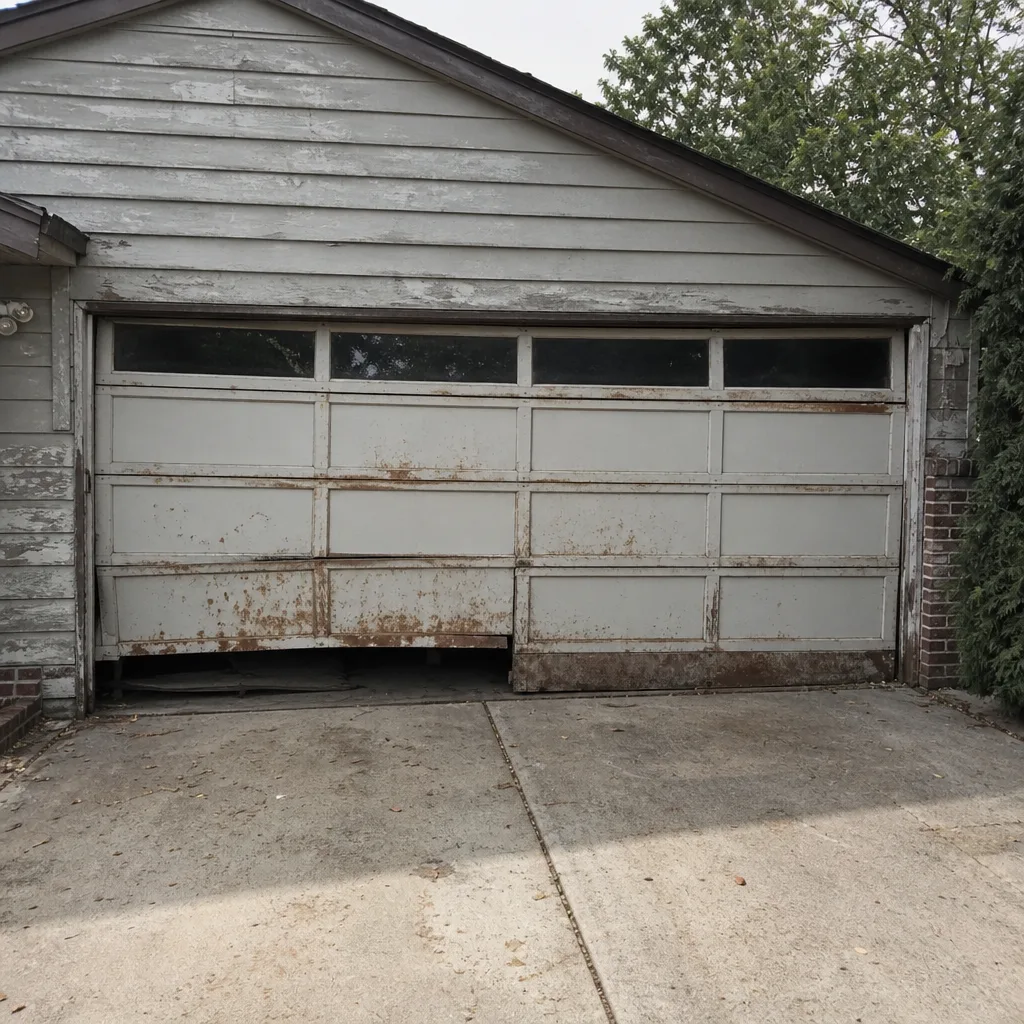 Before
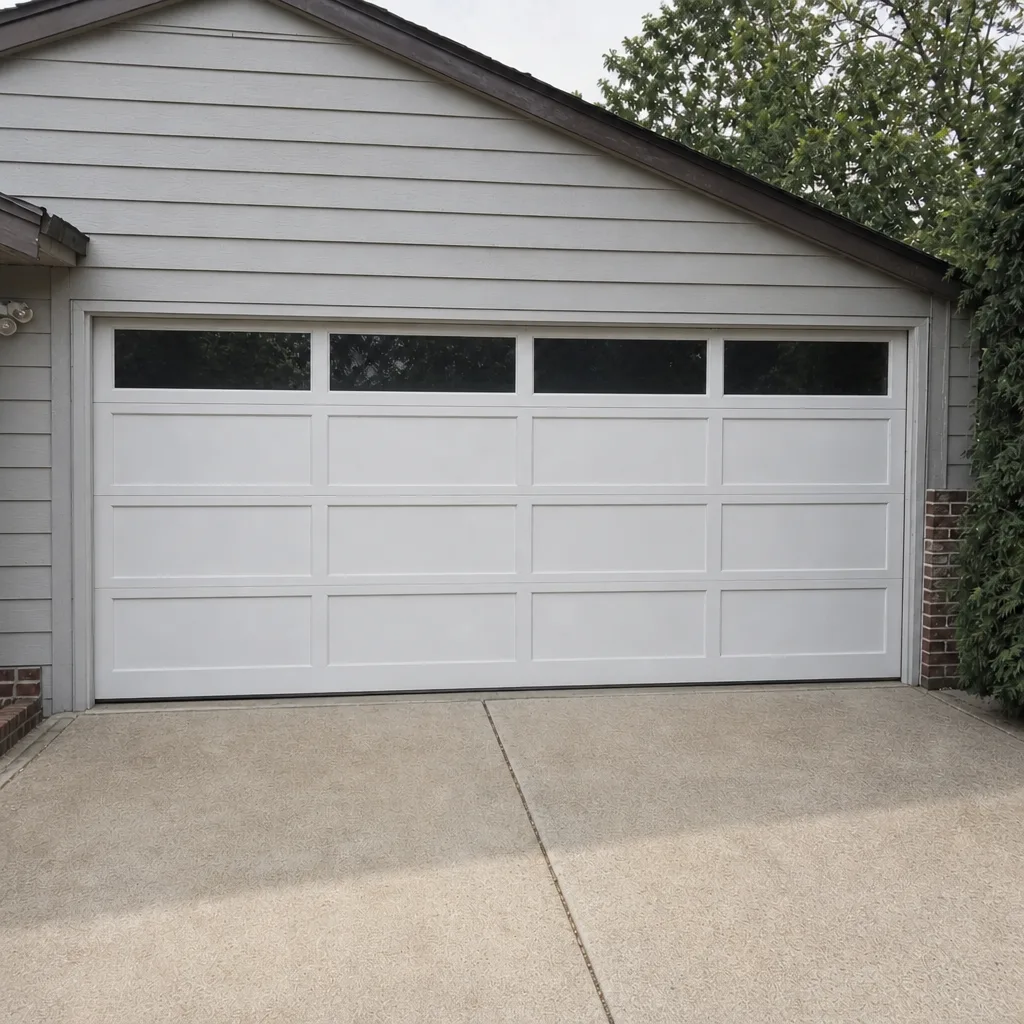 After
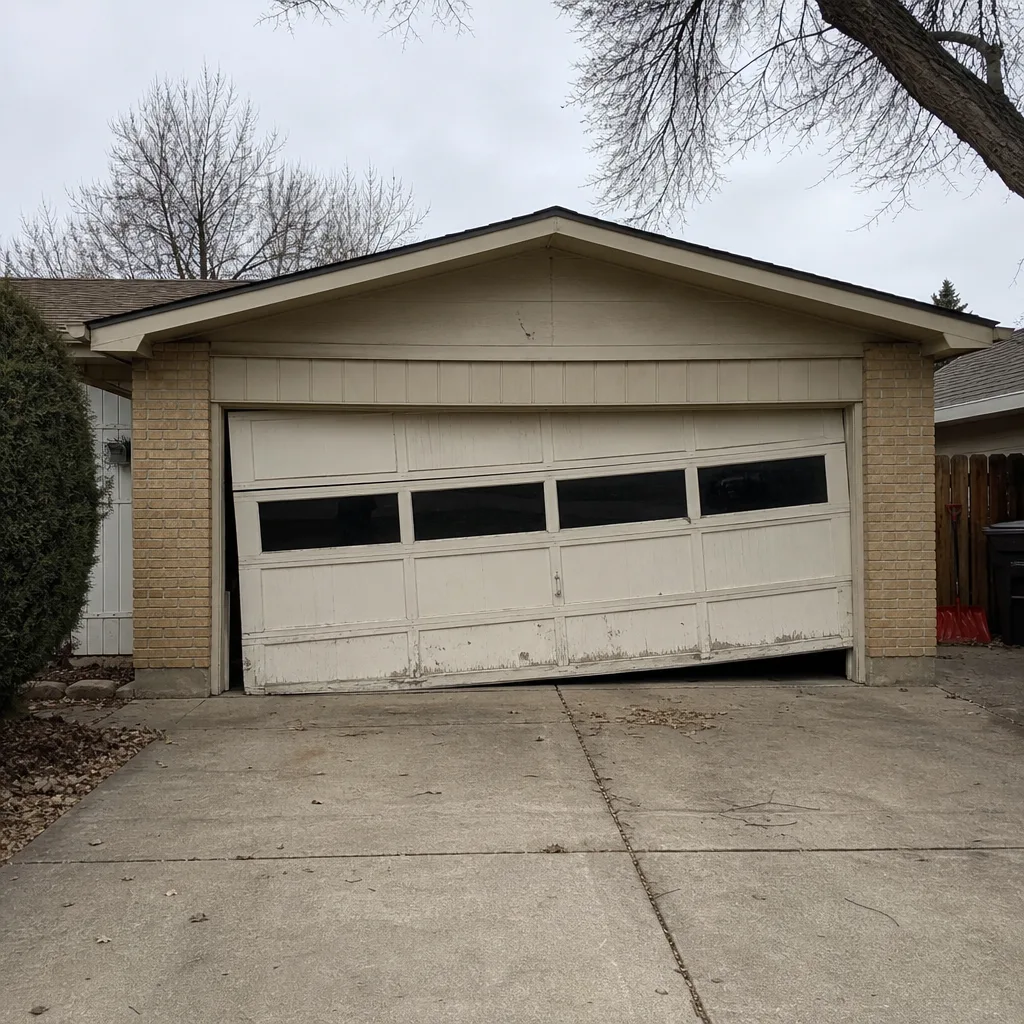 Before
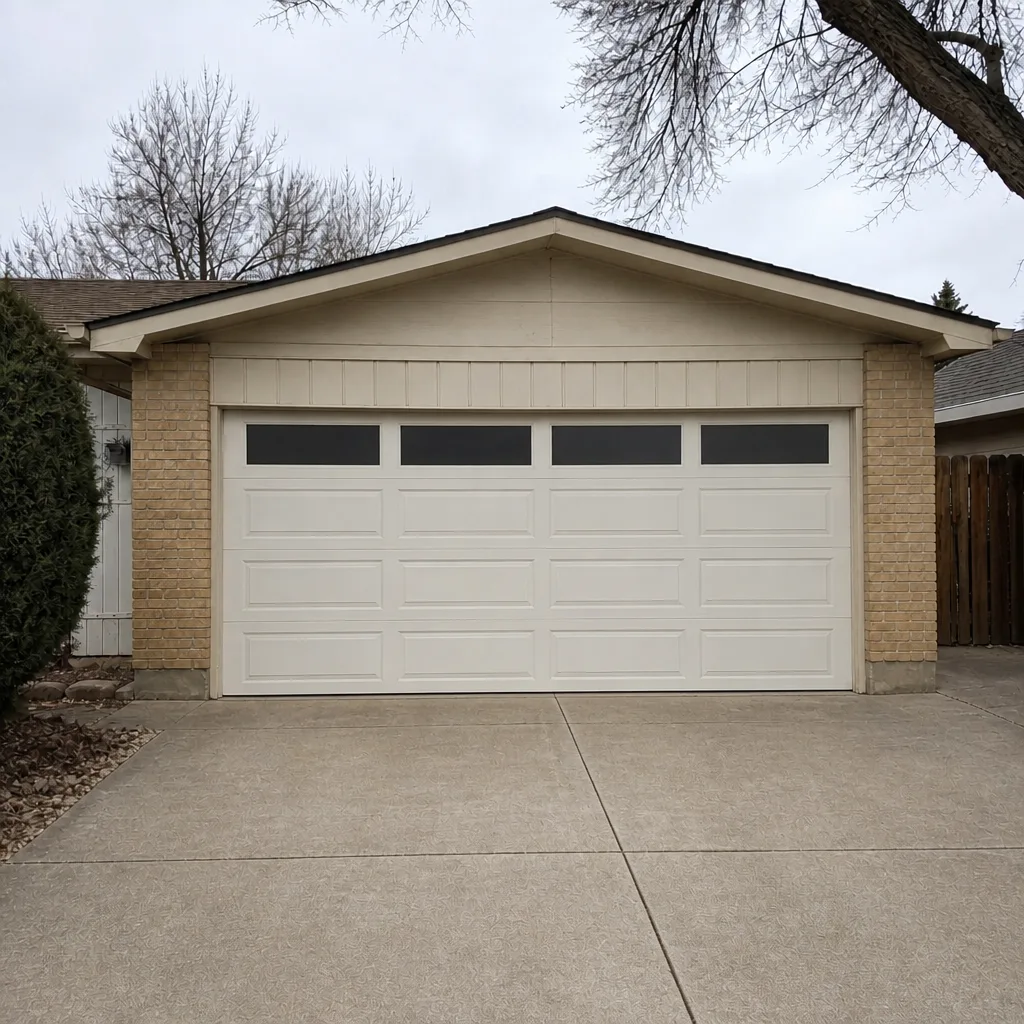 After
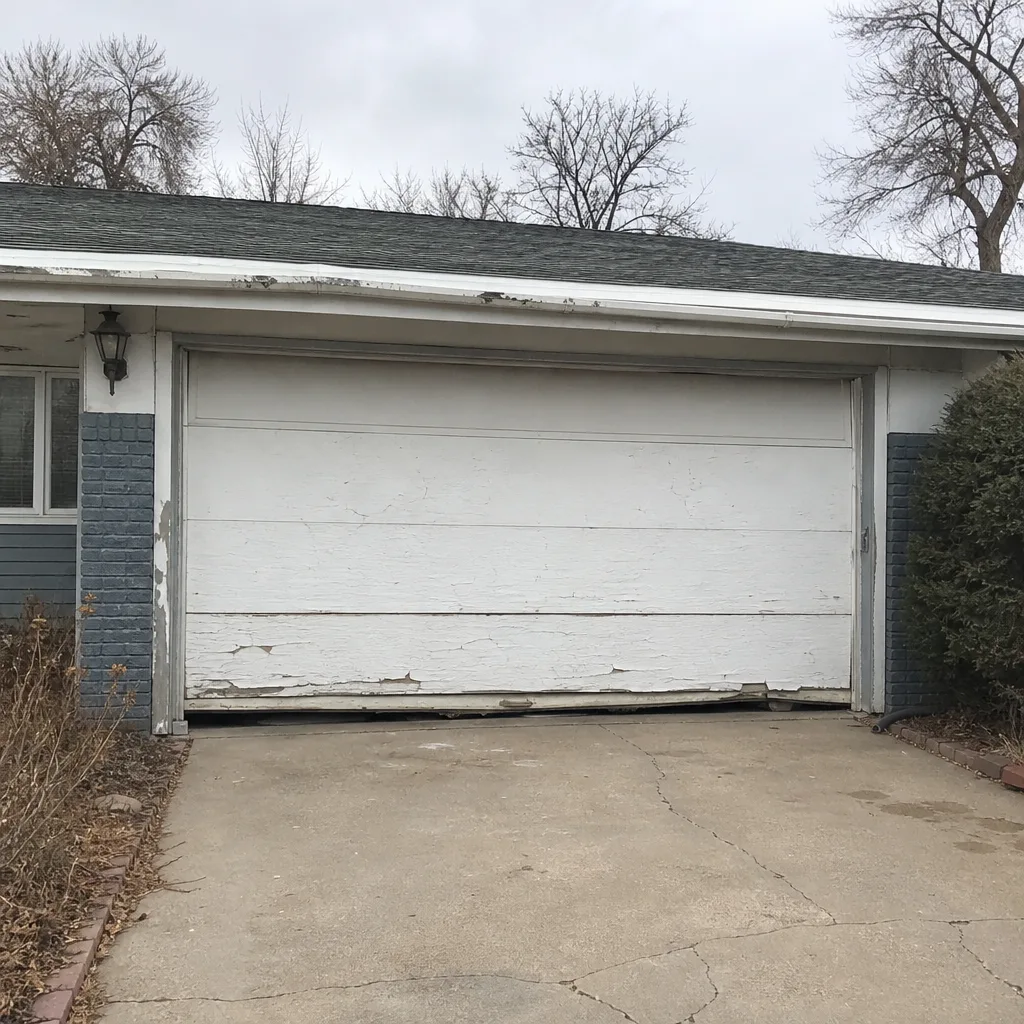 Before
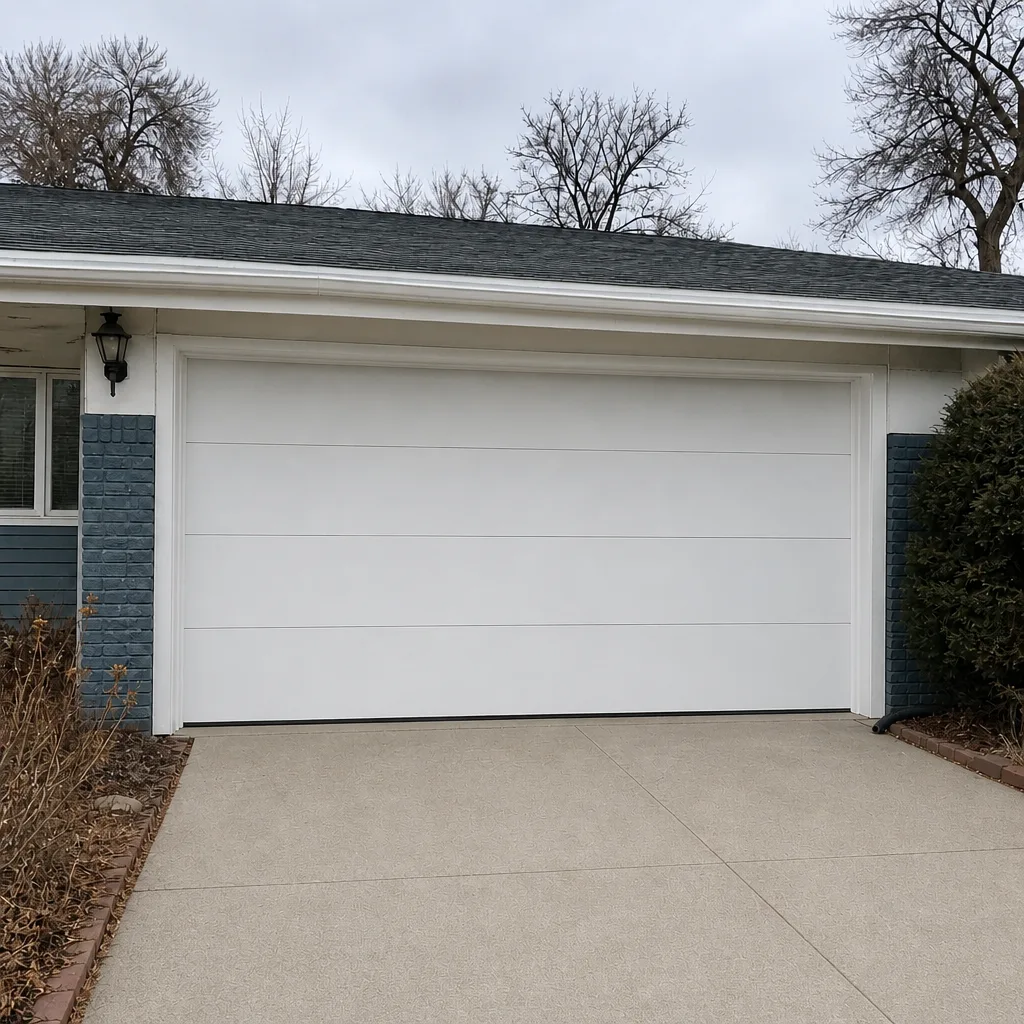 After
When to Call a Professional
Some brand questions you can answer at the kitchen table. Others need a trained eye on-site. Call a professional when your door won’t open or close reliably, when you hear a loud bang or metal scrape from the spring area, when the door sits crooked or the opener light won’t stop flashing, or when you’re weighing a replacement and need a real measure before you order. Spring repair in particular is a dedicated, high-risk service; leave it to a specialist. Our technicians have up to 13 years of experience across the brands Hampden homes actually have installed, and we supply garage door parts directly so the fix doesn’t stall on an order. We’ll tell you whether to repair or replace, and we mean it.
Hampden Garage Door Repair offers free estimates in Hampden. Call (855) 490-5104. We answer 24/7. Fast dispatch from 7am to 7pm, Sunday through Friday. The written estimate sets the price, and it’s agreed before any work starts. When you’re ready for a new door, garage door installation starts with a free measure and a written quote, so you know the spec and the price before you commit.
Frequently Asked Questions
For most Hampden homes, the best brand is the one a local technician can service with parts available nearby, on a finish that holds up to Colorado sun. A mid-tier door with strong local parts support beats a premium door that requires special orders. Match the tier to the door’s visibility and importance, then confirm serviceability. Call (855) 490-5104 for an exact quote; estimates are free.
Yes, as long as the opener is rated for the door’s actual weight and the safety-reversal and force settings are set to that door. Mismatches get blamed on brands but are almost always pairing errors. Have a technician measure lift force and recalibrate after pairing. Call (855) 490-5104 for a compatibility check; estimates are free.
There’s no honest universal number, because it depends on which part failed and which brand your door uses. A worn roller or a bad hinge is a different job from a broken torsion spring. Get a written estimate before any work starts; the quote you agree to is the price you pay. Call (855) 490-5104 for an exact quote; estimates are free.
No. The price is set by the written estimate and agreed before any work begins. If a technician finds something the assessment missed after starting, that gets discussed and priced with you first, not added silently to the invoice. Call (855) 490-5104 for an exact quote; estimates are free.
The local professionals we connect you with are licensed and insured as their state requires, and our technicians have up to 13 years of experience across the major brands. Confirm current credentials when you book if you need them for a home project. Call (855) 490-5104 to book.
That depends on your city’s building department, so the cleanest answer is to ask them directly before ordering. Requirements vary and typically hinge on structural changes versus a like-for-like replacement. A written measure and quote is the right first step. Call (855) 490-5104 for an exact quote; estimates are free.
The Bottom Line
Brand selection for a Hampden garage door is a local decision before it’s a national one. Evaluate a brand on parts availability, service network depth, and how its materials handle local sun and temperature range. Match the door and opener as a system, read the warranty fine print for what voids it and who honors claims, and match the brand tier to whether the door is street-facing and attached or a secondary door on a detached garage. Then confirm the whole thing is serviceable nearby. We work on the brand you already have, so you’re not locked into a relationship you don’t want.
Ready to get it sorted? Call (855) 490-5104 for a free estimate. We answer 24/7. Fast dispatch from 7am to 7pm, Sunday through Friday.
Written by the team at Hampden Garage Door Repair.